3 Skincare Picks for Acne-Prone Skin: Clogged Pores, Oiliness and Dryness
By URITRIP
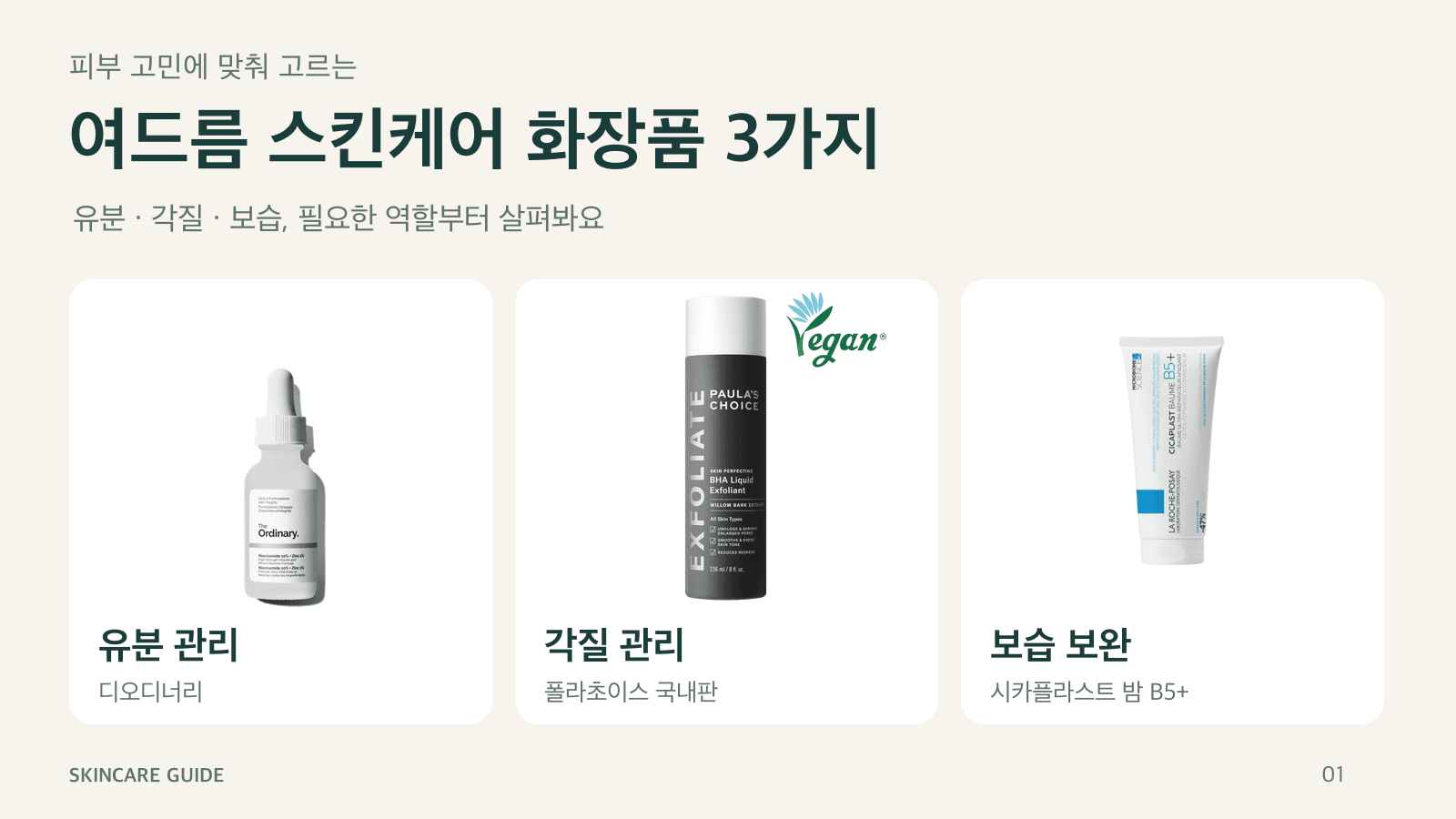
When breakouts keep coming but your face also stings and feels tight, it can be hard to tell whether you need more oil control or more moisture. A useful starting point is to give each product a clear job: an oil-control serum for excess shine, an exfoliant for blackheads and clogged pores, or a moisturizer when dryness is part of the picture. Red, painful acne needs a different conversation, though. Relying on these three skincare steps alone could delay treatment you actually need.
Instead of asking which product has the highest ingredient percentage, ask what is missing from your current routine. Knowing the job you want a product to do helps set realistic expectations—and makes it easier to avoid buying another version of something you already own.
Three skincare options, each with a different job
The products in this guide are The Ordinary Niacinamide 10% + Zinc 1%, Paula’s Choice BHA Liquid Exfoliant sold in South Korea, and La Roche-Posay Cicaplast Baume B5+. This is a comparison based on published product information and different skin concerns, rather than a ranking based on personal wear tests.
| Product | When it may be worth considering | What to check first |
|---|---|---|
| The Ordinary Niacinamide 10% + Zinc 1% | Excess shine and uneven texture | Niacinamide already in your routine, and how your skin tolerates a new serum |
| Paula’s Choice BHA Liquid Exfoliant, South Korean version | Blackheads and exfoliation | That the formula contains 0.5% salicylic acid, and whether you already use another exfoliant |
| La Roche-Posay Cicaplast Baume B5+ | Dryness and insufficient moisture | Whether you need a balm, and which amount and areas of application feel comfortable |
You do not need to start all three as a set. If your moisturizer works well and blackheads around your nose are your main concern, first decide whether an exfoliant would fill a gap. There is no obvious reason to replace your serum and cream at the same time. If your mouth area feels tight after applying an acne medication, on the other hand, improving moisture makes more sense than adding another oil-control step.
Changing one thing at a time also makes your routine easier to understand. If you introduce three products together, you may not know which one helped—or which one to stop if your skin starts to sting.
Clogged pores and inflamed acne need different approaches
Blackheads and whiteheads are comedones: acne lesions that form when pores become blocked. Small, skin-colored bumps can include closed comedones, but not every little bump is acne. Other skin conditions can look similar, so repeatedly adding exfoliants based on appearance alone is not a reliable approach.
Red, raised spots, pustules, and deep, firm, painful lumps involve more than surface texture or shine. Treatment depends on the type and severity of acne. Repeated pain or developing scars are good reasons to seek medical care.
Marks left after a breakout also deserve a closer look. Red marks, brown or darker patches, and indented scars are different concerns. A cosmetic product intended to improve the appearance of texture or tone cannot be expected to fill depressed scars. First consider whether you are still getting new breakouts, then choose the next step according to the kind of mark that remains.
The Ordinary Niacinamide 10% + Zinc 1%: an option for excess shine
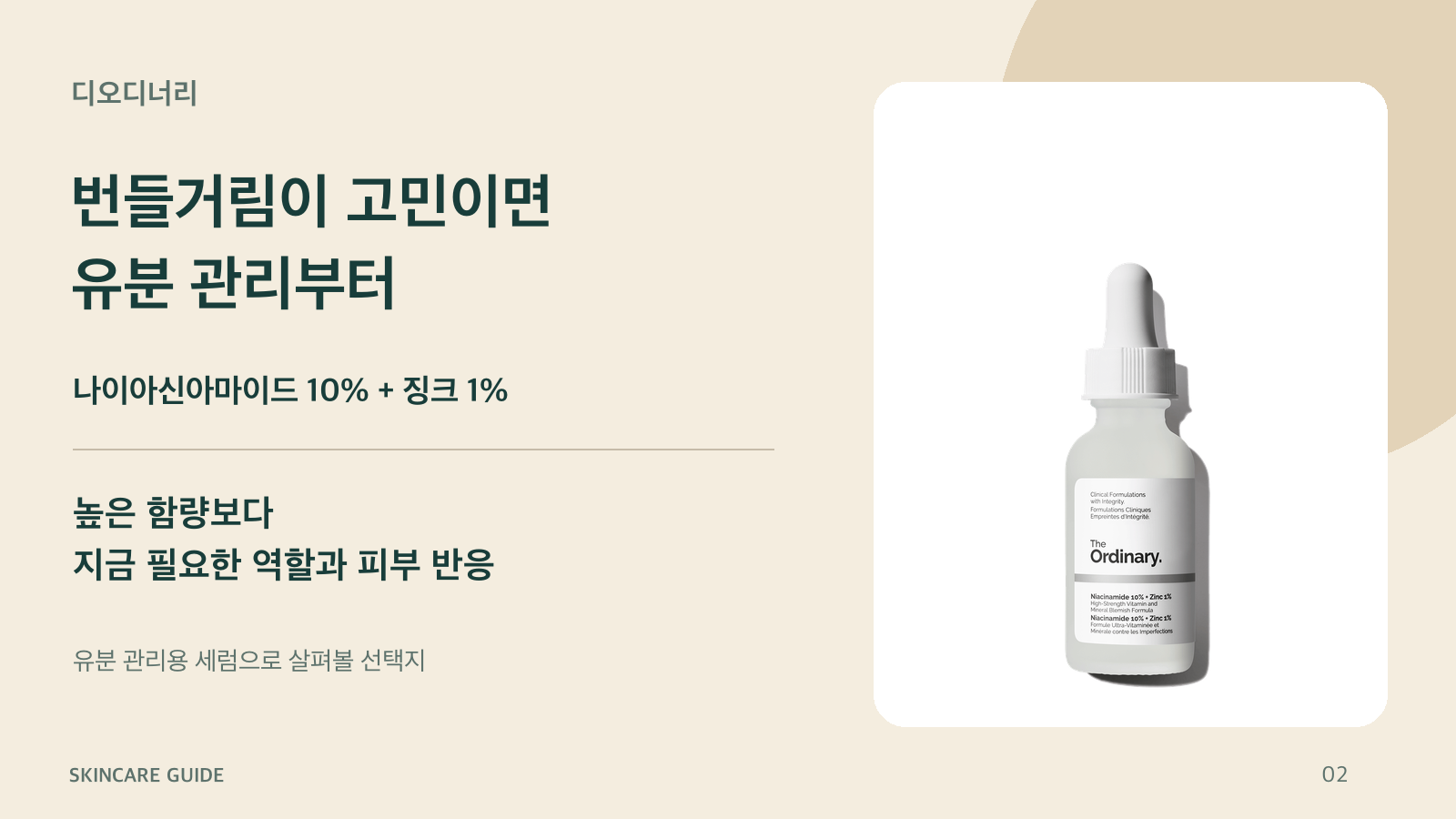
If your face gets shiny easily and you also want to care for uneven texture, The Ordinary Niacinamide 10% + Zinc 1% is one option to compare. The brand describes this water-based serum as targeting excess oil and texture while supporting the skin’s moisture barrier. Its clearly stated ingredients and concentrations make it easier to understand the role it is intended to play.
That 10% figure is not a score for acne-treatment effectiveness. A 20% product is not automatically twice as effective, either. Clinical studies involving niacinamide have also used 4% and 5% formulations. Evidence for an ingredient and evidence for a particular high-strength serum are separate things.
For example, a 12-week study evaluating 5% niacinamide alongside 2.5% benzoyl peroxide found an additional benefit for reducing non-inflammatory lesions, but no statistically significant difference between groups in the reduction of inflammatory lesions. Those findings cannot be presented as the results of using this Ordinary serum on its own: the concentration, formulation, and accompanying medication were different.
Think of this as an oil-control serum, rather than a medication to quickly settle inflamed acne. If your moisturizer already contains niacinamide and your current routine feels comfortable, consider whether a separate serum would add anything useful. Repeating an ingredient is not automatically a problem, but every extra step should have a purpose.
Follow the brand’s guidance on patch testing and watch how your skin responds. A small-area test cannot guarantee that a product will suit your whole face. Stop using it if burning or redness persists. A tight, dried-out feeling is not proof that your oil control is working well.
Paula’s Choice BHA Liquid: check the market and the formula
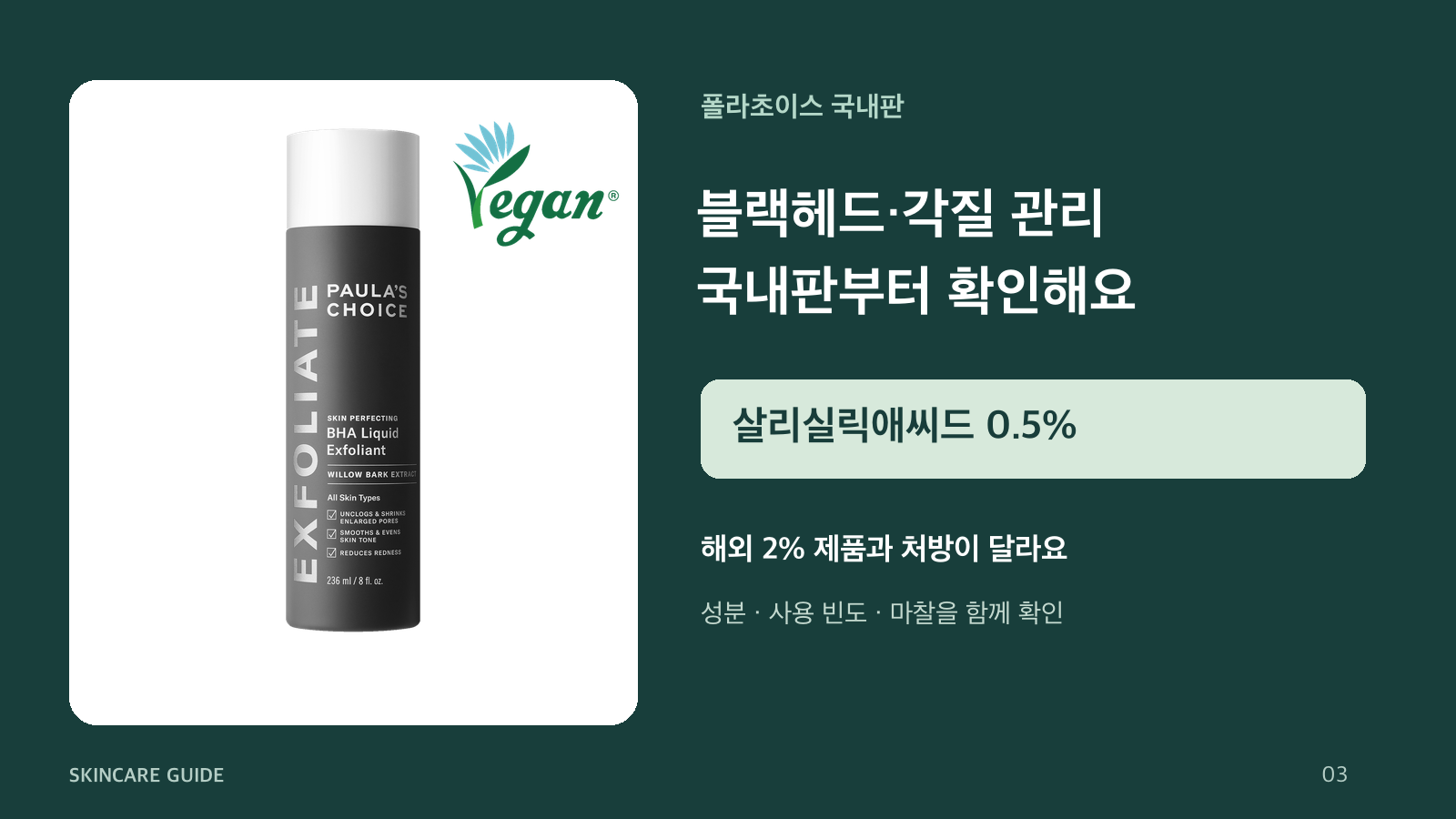
For blackheads around the nose or rough, flaky texture, a BHA exfoliant may be worth considering. Salicylic acid is the ingredient to look for in this category; it is used to address clogged pores and exfoliation.
The product discussed here is the South Korean BHA Liquid Exfoliant with 0.5% salicylic acid. It should not be treated as interchangeable with the Skin Perfecting 2% BHA Liquid commonly reviewed in English-language skincare content. Check the exact product name, market, ingredient list, and directions on the bottle you intend to buy. A routine or review based on the 2% formula does not automatically apply to the Korean version.
A liquid format lets you think about where and how much you apply without choosing a pre-soaked pad. That does not make a liquid inherently gentler than a pad. Soaking a cotton round and rubbing the same area repeatedly still adds friction. With pads, the formula, concentration, fabric, and your wiping technique all matter.
Exfoliation does not have to mean scrubbing skin clean. You do not need to see residue on a cotton pad for a product to be doing its job. Repeated rubbing on top of chemical exfoliation can leave skin uncomfortable. Let the product directions and your skin’s response guide frequency; even if a label permits daily use, there is no need to make daily application your starting goal.
If you already use other acid exfoliants or acne medications, consider overlap and irritation before adding BHA. This is not a blanket ban on combining ingredients. It is a reason to be cautious about adding more exfoliation when skin already stings or peels. If you are receiving acne treatment, ask your clinician or pharmacist about compatibility with the medication you actually use.
Cicaplast Baume B5+: consider it when moisture is falling short
Even oily skin can become dry and easily irritated during acne treatment. Choosing a moisturizer solely because you usually identify as “oily” may overlook what your skin needs right now. Before adding another product to reduce shine, check whether you can keep your skin comfortably moisturized.
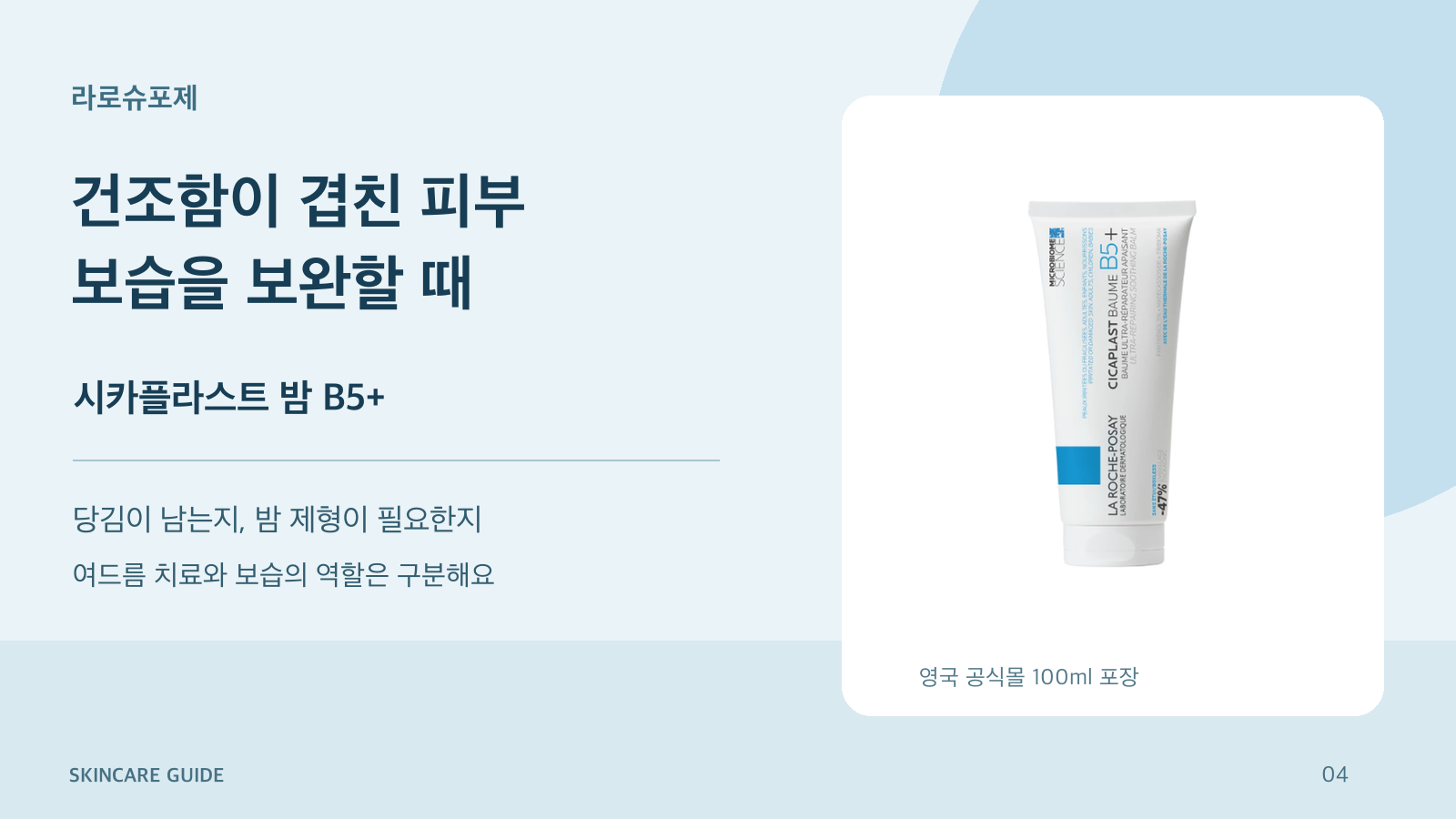
La Roche-Posay Cicaplast Baume B5+ is an option if you are looking for a moisturizing balm. The UK ingredient list includes glycerin, shea butter, and panthenol. A balm may be worth comparing if a lightweight moisturizer leaves dryness behind, but how rich or comfortable it feels will depend on your skin and the amount you use. The image shows the UK 100 mL packaging. Check the label and ingredient information for the version sold where you shop.
The reason to consider it is a gap in moisture, rather than the word “cica.” The American Academy of Dermatology explains that some acne treatments can dry and irritate skin, and that a moisturizer can help people tolerate treatment. Moisturizing can therefore support a routine you need to keep using, beyond simply making skin feel softer.
If your current moisturizer is already enough, or a balm feels too heavy, there may be little reason to switch. Creams are not automatically unsuitable for acne-prone skin, and lightweight serums are not automatically better. More useful questions are whether tightness remains after moisturizing, and whether the new product causes discomfort.
A moisturizing balm should not be given the job of treating inflamed acne. Applying a thick layer over red spots does not complete an acne treatment plan. A non-comedogenic claim can be a useful shopping clue, but it is not a guarantee that no one will develop new breakouts.
Build a simple routine, then add the one step you need
For mornings, start with gentle cleansing, moisturize as needed, and finish with sunscreen. For time outdoors, look for a water-resistant, broad-spectrum sunscreen with SPF 30 or higher. Sunscreen does not treat acne, but it remains part of basic care when darker marks after breakouts are a concern.
In the evening, remove makeup and sunscreen, then follow with the care and moisture you need. If you use medication, follow its instructions and your clinician’s or pharmacist’s advice on application order and quantity. An ingredient name such as azelaic acid appearing in both cosmetics and medicines does not make the products interchangeable as treatments.
A squeaky-clean feeling is not a useful measure of cleansing success. Use a gentle cleanser with your fingertips, and ease up on repeated rubbing with scrubs or tools. Neither a pH number nor the amount of foam tells you everything about cleansing strength or irritation.
When introducing a product, briefly record where and how often you use it, any tightness or stinging, and new spots. Feeling less shiny straight after application and seeing fewer acne lesions are different outcomes. The American Academy of Dermatology notes that acne treatment can take at least six to eight weeks before fewer breakouts begin to appear. That timeline does not guarantee results from these three cosmetics, and it is not a reason to put up with significant irritation.
The best next purchase is the one that fills a gap in your current routine. Keep a moisturizer that feels comfortable. If blackheads bother you, consider whether you need exfoliation and whether you already have it covered. If pain and scarring keep recurring, put treatment first. Before adding anything to your cart, finish this sentence: “I want this product to help with…” A clear answer makes a more useful starting point than a bestseller badge.
Shopping notes
The purchase link provided here is for The Ordinary Niacinamide 10% + Zinc 1% 30 mL on OLIVE YOUNG Global. Availability and shipping eligibility depend on your destination. We have not added Global purchase links for the other two products because matching listings could not be confirmed. In particular, the Korean 0.5% BHA should not be replaced with a 2% listing just to provide a shopping button.
The shopping link uses URICOSME’s affiliate referral code. We may earn a commission on qualifying purchases.