Ingredient-first sheet masks: how Sungboon Editor (SBEDT) found its place
By URITRIP
A brand built on "ingredients above all"
The first thing worth examining about any K-beauty brand is what it places at the center of its identity. Sungboon Editor (SBEDT) embeds the answer in its name. Under the slogan "ingredients are the result," the brand calibrates formulation ratios and active concentrations with unusual care.
The shift toward "what is in it, and how much" — rather than packaging or campaign messaging — is no longer a passing trend. It has settled into the baseline expectation for K-beauty. Sungboon Editor sits squarely within that movement.
The signature: Deep Collagen Power Boosting Mask
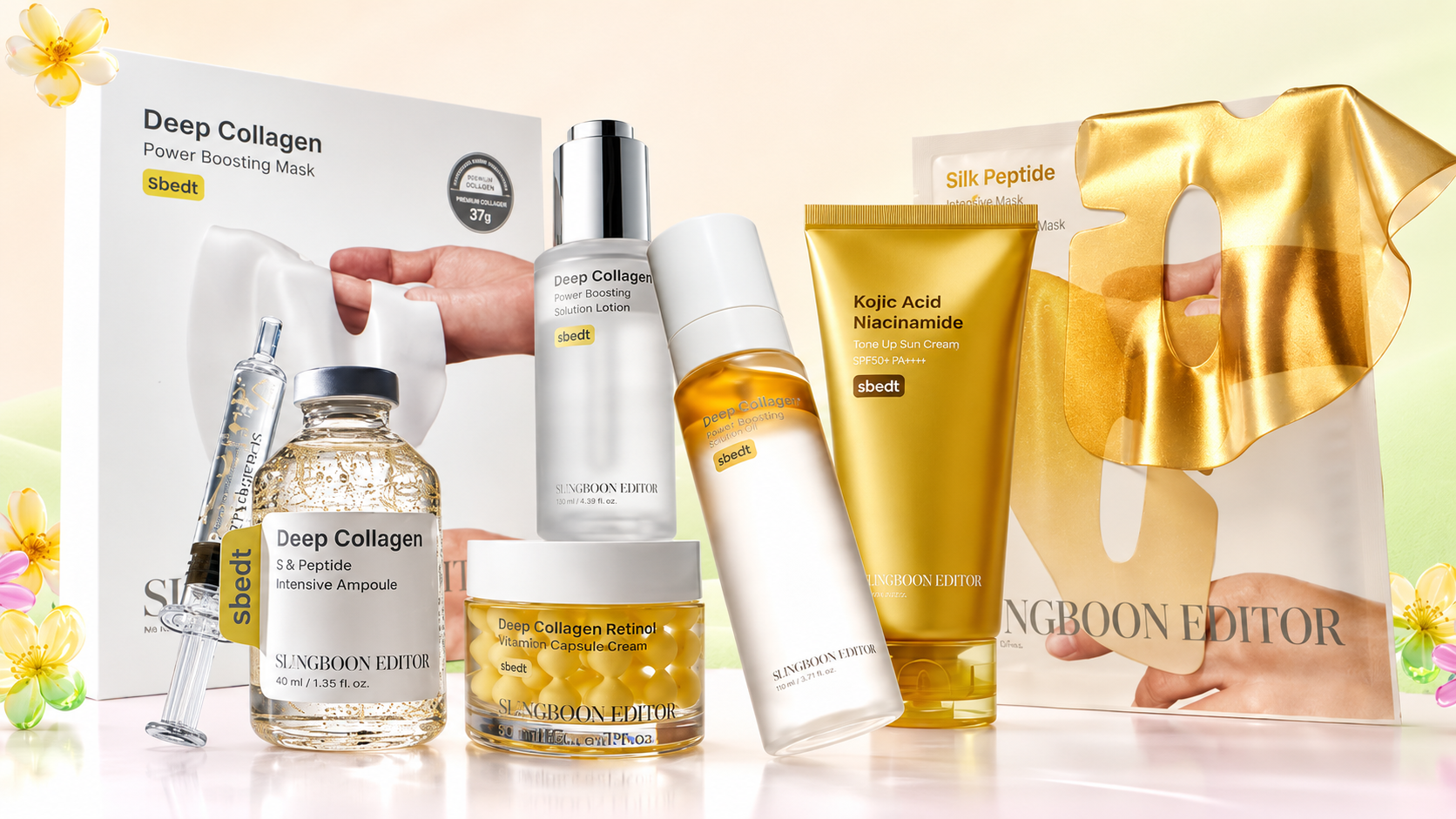
The lineup centers on the Deep Collagen Power Boosting Mask. The product won in the sheet mask category at the 2024 Olive Young Awards, securing its position domestically, and ranks among the top entries within Amazon's K-beauty category, extending its reach across global channels.
Two points stand out when the product is examined in detail.
The first is collagen content at low molecular weight. A single sheet contains 2,160,000 ppb of collagen. The figure matters less than the design choice behind it: a 500 Da-class ultra-low-molecular form. Larger collagen molecules tend to remain on the skin's surface, while lower-weight variants are more likely to reach beyond the stratum corneum. The brand's reference to a particle size around one fifty-thousandth of a pore's width arrives in the same context.
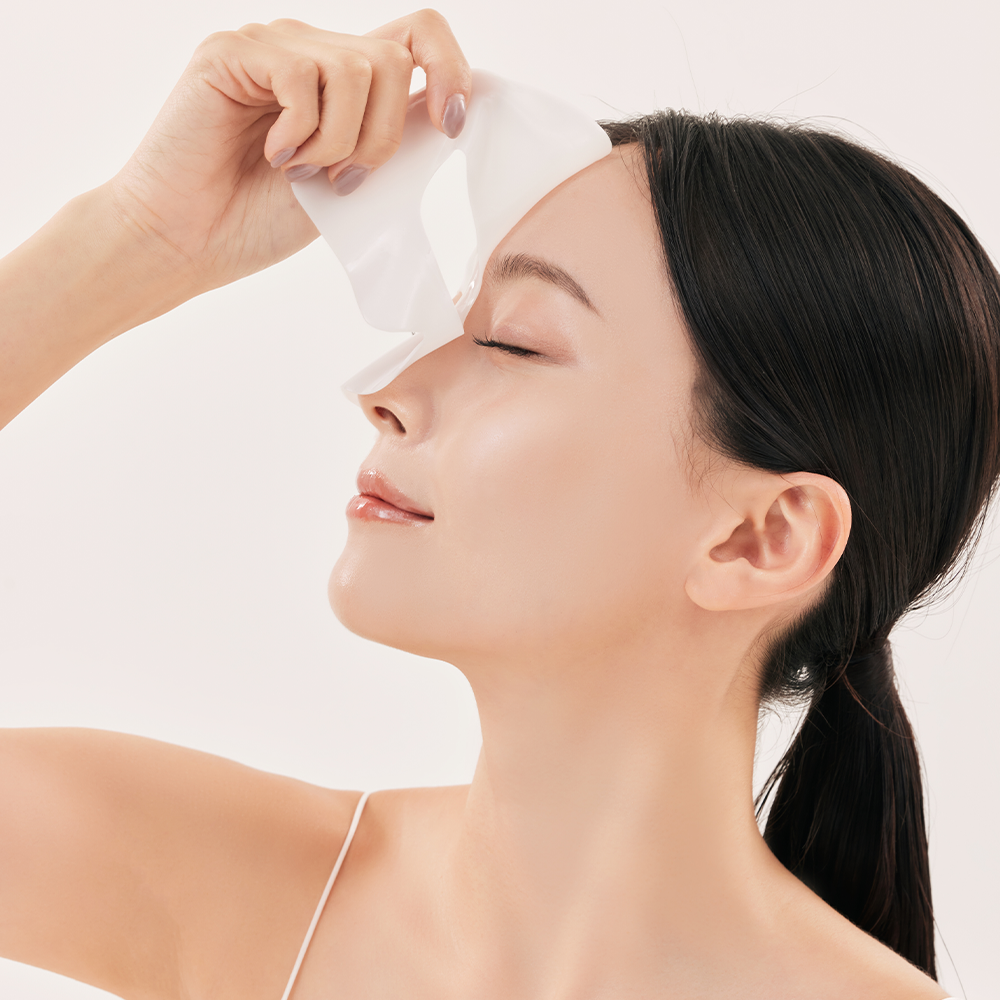
The second is the format itself, marketed as a "real collagen jelly" sheet. Where most sheet masks are non-woven fabric soaked in essence, this product is condensed collagen essence shaped into a jelly sheet. Once placed on the face, it slowly melts and adheres, with little run-off. Anyone familiar with the experience of a sheet drying out and pulling moisture from the skin tends to notice the difference fairly quickly.
Expanding the lineup — beyond collagen
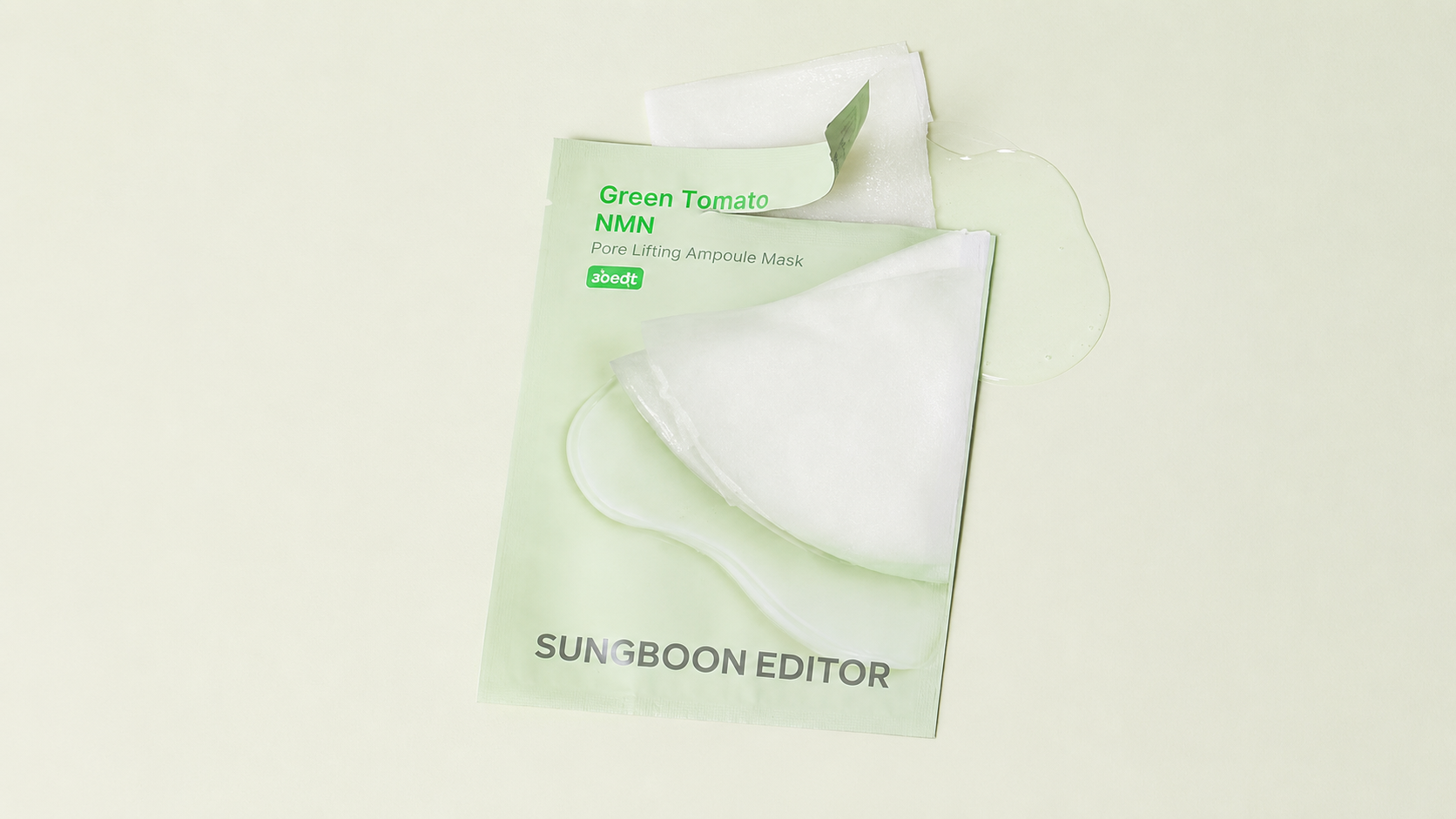
Sungboon Editor has grown its lineup by going deeper into single categories rather than wider. Within the Deep Collagen line, variants such as the Anti-Wrinkle Lifting Mask (gel type) focus on firmness and wrinkle care. Across the wider catalog, products such as the Green Tomato Pore Lifting Ampoule, the Silk Peptide Lifting Ampoule, and the Alaska Salmon PDRN Barrier Cream all share the same logic: a single hero ingredient pushed to a high concentration. The brand's direction reads consistently even from a single sheet mask.
Texture and who it suits
Drawing on product specs and general user reviews, the sheet sits closer to a thick jelly than to a typical mask. It avoids both the constrained feel of thin, easily-torn sheets and the heaviness of denser hydrogel packs. Reviews skew toward those in their thirties and above with concerns around firmness and dryness, and the product is most often discussed within the context of a focused evening routine. Reports of smoother, more even-toned skin the morning after appear repeatedly across reviews.
That said, given the high concentration of active ingredients, those with very sensitive skin or active breakouts may find it safer to consider a calming product from another line first.
Market positioning
At Olive Young, a four-sheet box is priced around 18,000 KRW, placing the product in the "semi-premium" range between daily sheet masks and premium booster ampoules. It is positioned as a focused-care product used two to three times a week rather than a daily item. Combining notable collagen content with a developed format at this price point is what gives the line its competitive footing.
Closing — choosing the next sheet mask
The K-beauty sheet mask market is close to saturation, and being labeled "new" no longer carries a brand on its own. Sungboon Editor's consistent performance across Amazon, Olive Young, Musinsa, and W Concept rests on a fairly straightforward foundation: ingredient concentrations are disclosed numerically, and the format is designed around helping those ingredients perform.
The following order is a useful reference when choosing the next sheet mask:
- Check whether ingredient concentrations are disclosed in measurable units (ppb or ppm).
- Look for the molecular weight or absorption design of the key ingredient.
- Compare the sheet format (non-woven, hydrogel, jelly) against personal preferences for feel.
- Decide in advance whether the product is intended for daily use or for two-to-three-times-a-week focused care, which makes the price point easier to evaluate.
Within these four criteria, Sungboon Editor's lineup offers a fairly clear answer.