Azulene Benefits and How to Use It: A K-Beauty Ingredient for Sensitive Skin
By URITRIP

Azulene is emerging as a next-generation K-beauty ingredient for sensitive skin. An internal URICOSME analysis comparing search data found that searches for azulene rose 29% over the past year versus the previous 12-month period. Although its total search volume remains lower than PDRN, its growth rate was about two percentage points higher. Search figures can vary by timing and methodology, but the overall trend points to growing consumer interest in azulene.
Known for its vivid blue color, azulene is commonly used in soothing cosmetics designed for skin that feels sensitive or looks flushed. Its use has recently expanded beyond azulene ampoules and creams to cleansers, sheet masks, and scalp and hair-care products.
What exactly is azulene, and how is it different from cica or PDRN? Here is a practical guide to its benefits, how to use it, and what to look for when choosing a product.
What Is Azulene?
Azulene is a blue-hued compound commonly associated with botanical sources such as chamomile and yarrow. Its name comes from the Spanish word azul, meaning “blue.” Because of its distinctive deep-blue color, it is also marketed as “blue azulene” in the beauty industry.
On a cosmetic ingredient list, you may find one of the following names:
- Azulene
- Guaiazulene
- Chamazulene
- Sodium Guaiazulene Sulfonate
Guaiazulene, an azulene derivative, is frequently used in skin-care formulas because it is easier to incorporate into stable products. The U.S. FDA lists guaiazulene as a color additive exempt from certification for use in externally applied cosmetics. This does not mean that it is permitted without restriction in every cosmetic category; eye-area use, for example, is excluded. See the FDA list of color additives permitted in cosmetics for details.
A blue product does not necessarily contain a high concentration of azulene. Other colorants may be responsible for the shade, so check the full ingredient list rather than judging a product by color alone.
Azulene Benefit 1: Soothing Sensitive-Feeling Skin
Azulene is best known for its skin-soothing role.
UV exposure, sudden temperature changes, over-exfoliation, and retinol can temporarily leave skin looking red or feeling sensitive. Azulene is used as a skin-conditioning ingredient in formulas intended to help stressed skin feel more comfortable.
However, findings from laboratory or medical-use research should not be treated as proof that an over-the-counter cosmetic can treat a skin condition. Results depend on the concentration and the finished formula, and azulene cosmetics should not be described as treatments for skin disease.
Azulene Benefit 2: Caring for Redness-Prone Skin
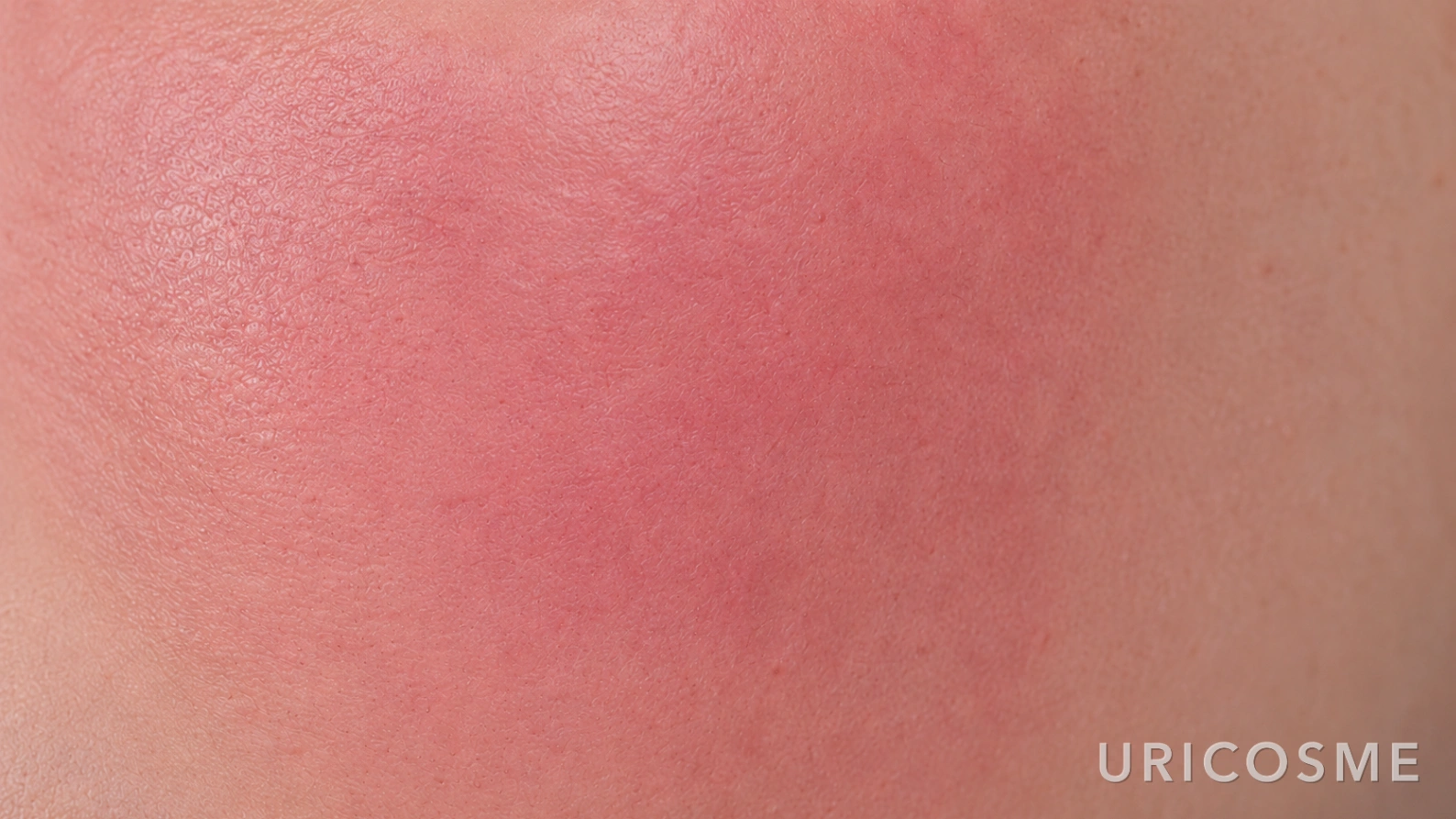
Azulene cosmetics are often formulated for sensitive, redness-prone skin or skin affected by temporary external stress. An azulene serum or cream may be a useful supporting step in situations such as:
- When skin feels hot after sun or heat exposure
- When skin feels temporarily sensitive after exfoliation
- When retinol or vitamin C leaves skin feeling uncomfortable
- When dryness is accompanied by visible redness
- When skin needs soothing care after shaving or hair removal
If redness, pain, or itching persists or becomes more severe, consult a dermatologist instead of relying on cosmetics alone.
Azulene Benefit 3: Supporting Hydration and the Skin Barrier
Azulene itself is not considered a powerful humectant or moisturizer. However, a formula that combines it with widely used hydrating and barrier-supporting ingredients—such as ceramides, panthenol, or hyaluronic acid—may be useful for sensitive skin.
| Skin concern | Ingredients to look for alongside azulene |
|---|---|
| Dry, sensitive skin | Ceramides, squalane |
| Dehydrated skin | Hyaluronic acid, glycerin |
| Stressed skin | Panthenol, allantoin |
| Redness-prone skin | Centella asiatica extract, madecassoside |
| Skin using retinol | Ceramides, panthenol |
If soothing is your goal, consider the entire formula rather than comparing azulene concentration alone. Fragrance, essential oils, denatured alcohol, and other ingredients may irritate some people.
Azulene vs. Guaiazulene
Azulene and guaiazulene are sometimes used interchangeably in product marketing, but they are not exactly the same compound.
| Category | Azulene | Guaiazulene |
|---|---|---|
| What it is | The basic blue-colored compound | A derivative with an azulene structure |
| Ingredient-list name | Azulene | Guaiazulene |
| Common cosmetic role | Skin conditioning | Skin conditioning and color |
| Typical products | Serums, creams, cleansers | Ampoules, creams, sheet masks |
| Color | Blue | Deep blue |
Most shoppers do not need to draw a strict line between the two. It is more useful to check whether an azulene-family ingredient appears on the full ingredient list and whether the formula also contains moisturizing or barrier-supporting ingredients suited to your skin type.
Azulene vs. Cica
Azulene and cica both appear in soothing skin-care products, but the terms cover different types of ingredients.
Cica is a beauty-industry term generally used for Centella asiatica and its derivatives. Centella extract, madecassoside, asiaticoside, and related ingredients are used in products designed to soothe and support the skin barrier.
Azulene and guaiazulene, by contrast, refer to more clearly defined individual compounds or derivatives. They are often included in targeted soothing formulas for skin that is temporarily flushed or sensitive.
You do not have to choose one over the other. Some formulas combine both, and current evidence does not establish that azulene is always faster or better than cica. Base your choice on your skin type, the complete formula, and how the product feels on your skin.
Azulene vs. PDRN
Azulene and PDRN have both gained attention in K-beauty, but consumers generally look to them for different reasons.
| Category | Azulene | PDRN |
|---|---|---|
| Main cosmetic interest | Soothing care, visible redness care | Skin conditioning, firmness and radiance care |
| Common target user | Sensitive or reactive skin | Dry skin or skin concerned with loss of firmness |
| Typical products | Soothing ampoules, serums, creams | Serums, ampoules, firming creams |
| Ingredient type | Azulene-family compounds | DNA-derived polynucleotide ingredients |
Azulene has a relatively clear search intent centered on soothing sensitive skin. Topical PDRN cosmetics, however, should not be assumed to work in the same way as injectable PDRN. Molecular weight, formulation, and delivery route all affect performance, so findings from injectable products cannot simply be applied to ordinary cosmetics.
How to Choose Azulene Skin Care by Skin Type
Sensitive skin
Start with an azulene cream that is low in fragrance and essential oils and includes ingredients such as panthenol or ceramides. Test it on a small area before applying it more widely.
Dry skin
A lightweight azulene ampoule alone may not provide enough moisture. Pair it with a cream containing ceramides, squalane, shea butter, or other emollient ingredients.
Oily or combination skin
A hydrating azulene serum or gel cream may feel more comfortable than a rich balm. Look beyond the words “contains azulene” and consider oiliness, texture, and whether the finished product has undergone non-comedogenic testing.
Acne-prone skin
Azulene may help stressed skin feel more comfortable, but it is not an acne treatment. It does not replace evidence-based acne ingredients such as salicylic acid, benzoyl peroxide, or adapalene. Consult a dermatologist for moderate or severe acne.
Azulene Side Effects and Precautions
The use of azulene-family ingredients in cosmetics does not guarantee that every formula will be irritation-free for every person. If you are allergic to chamomile or plants in the Asteraceae family, pay close attention to formulas that also contain botanical extracts or essential oils. Fragrance, preservatives, and other ingredients may also trigger a reaction.
For safer use:
- Test a new product on a small area first.
- Stop using it if stinging, itching, swelling, or redness persists.
- Do not apply it at your own discretion to broken or wounded skin.
- Follow the directions and warnings on the product label.
- Use sunscreen during the day.
- Do not use cosmetics to treat a skin disease.
The American Academy of Dermatology recommends testing a new skin-care product on a small area, such as the inner arm, in the same manner directed for normal use for seven to ten days.
Azulene Product Checklist
- Does the ingredient list include Azulene, Guaiazulene, or a related derivative?
- Is the texture appropriate for your skin type?
- Does the formula include supporting ingredients such as ceramides or panthenol?
- Are you sensitive to fragrance or essential oils in the product?
- Do user reviews come from people with a skin type similar to yours?
- Does the brand disclose the participants, duration, evaluation criteria, and results of any human-use study it cites?
Do not rely on claims such as “high concentration” or “instant soothing” alone. Compare the complete formula, test conditions, and intended use.
Why Azulene Is Emerging as a Next-Generation K-Beauty Ingredient
Azulene stands out not only for its vivid blue color but also for its clear cosmetic purpose: helping sensitive-feeling skin feel more comfortable. Its use is expanding from ampoules, serums, and creams into scalp and hair care.
Still, azulene is not a cure-all for every skin concern. Choose products based on the full ingredient list, formula, and your skin type—not color or trends alone.
If your skin flushes easily or feels sensitive to external stress, a formula that combines azulene with ceramides, panthenol, or hyaluronic acid can be a practical place to start. Stop using the product and seek professional care if a skin reaction persists or worsens.
This article provides general information about cosmetic ingredients and is not a substitute for medical diagnosis or treatment.