What it is
Mugwort extract comes from the leaves of Artemisia princeps, native to Korea, and contains flavonoids such as jaceosidin and eupatilin along with volatile compounds. Labels list it as mugwort extract or Artemisia princeps leaf extract, distinct from sweet wormwood (Artemisia annua).
It appears in 32 Korean products, in mugwort essences, soothing toners and masks. A single-ingredient essence based on mugwort water made it widely known as a calming ingredient.
Role in cosmetics
Calming redness
Based on the anti-inflammatory activity of its flavonoids, it is used in products that settle irritated, reddened skin and appears beside centella in Korean soothing lines.
Antioxidant support
Research shows its polyphenols neutralize free radicals, giving it a supporting role in daily soothing products. Mugwort water bases list it in the water position.
Evidence and scope
The anti-inflammatory and antioxidant activity of Artemisia princeps extract is supported by Korean cell and animal studies, and small human studies exist for atopic skin. Independent human studies at cosmetic levels are rare, and active content is not stated, so products are hard to compare.
Concentration and formulation
The extract is used at 0.5 to 5 percent, and mugwort water bases list it first. Water-soluble, it fits toners and essences, and its volatile compounds can leave a characteristic mugwort scent.
Cautions
As a daisy family plant, contact reactions are reported in people with daisy family allergies such as ragweed or mugwort pollen, so patch test. Take particular care with mugwort pollen allergy.
Similar ingredients
| Cica (Centella Asiatica)Centella Asiatica Extract | Centella has more recovery and barrier research with purified actives, while mugwort is a calming extract with high recognition in Korea. Many soothing products include both. |
| ChamomileChamomilla Recutita (Matricaria) Flower Extract | Chamomile is the European daisy family soothing extract and mugwort the Korean native one. Those with daisy family allergies should take care with both. |
Frequently asked questions
Should I avoid it with a mugwort allergy?+−
Mugwort pollen allergy can extend to the extract, so patch test before use.
Is mugwort extract the same as sweet wormwood extract?+−
They are different species. Cosmetics commonly use Artemisia princeps, while sweet wormwood is listed separately as Artemisia annua.
Is it fine for acne-prone skin?+−
Anti-inflammatory research and low irritation make it common in soothing toners for acne-prone skin.
Sources and review date
- CosIng 성분 정보: Artemisia Princeps Leaf ExtractEuropean Commission · 2025
- Artemisia princeps 항염·항산화 연구 (PubMed 검색)PubMed · 2024
Last reviewed 2026.09.23 · Next review 2027.03.23
No related products yet — how about these?


Related journal
Product Guide • 2026-08-27
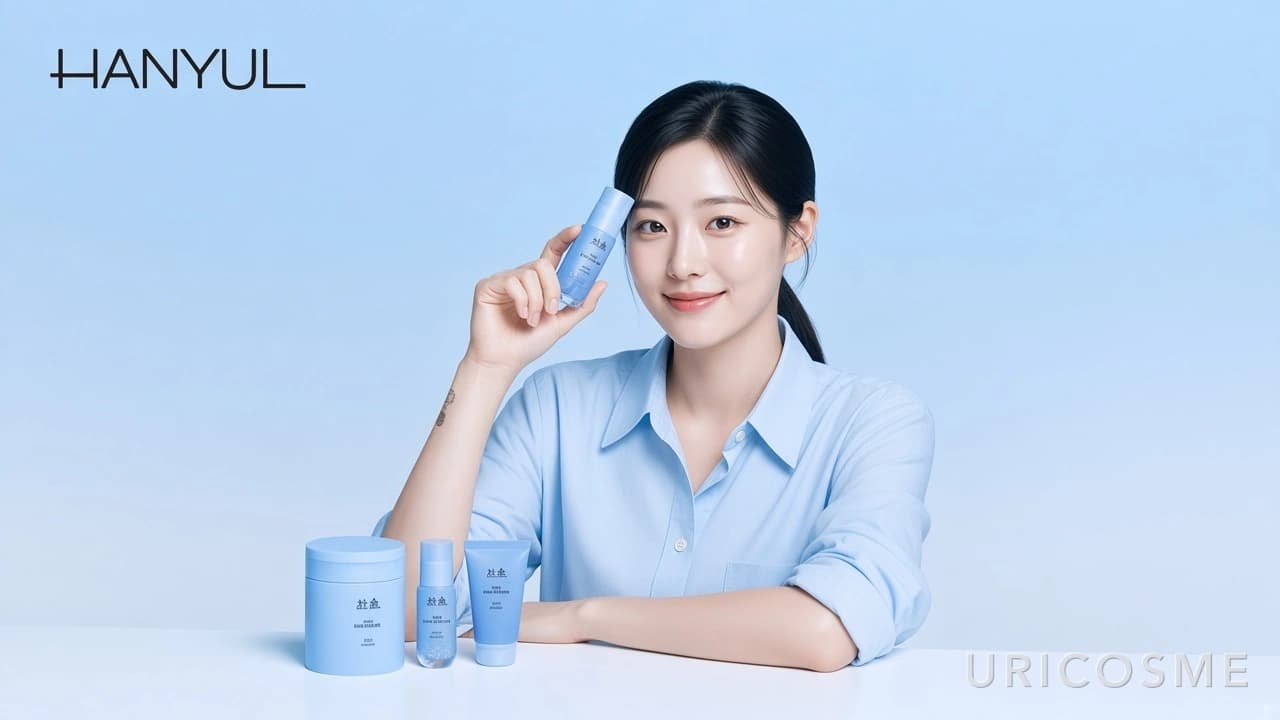
Korean Natural Care for Soothing and Firmness: HANYUL Core Product Guide
Trend Report • 2026-05-22
Korean clean beauty in 2026: moving past 'vegan,' into the next phase
Product Guide • 2026-05-20
isntree: a Korean skincare brand built on plant ingredients and vegan formulas
Product Guide • 2026-05-08