Baked Apricot Makeup: Soft Color Pairings and the Order to Apply Them
By URITRIP

"Baked apricot," gu-un salgu-bit in Korean, describes a soft autumn look built on warm peach softened with a little beige and brown. It works best when you mix the brightness of peach with the calm of brown a little at a time, rather than covering the whole face in apricot. The lids stay light and soft, the lash line stays narrow and defined, and the cheeks and lips are matched in intensity. If you have wanted autumn makeup but found deep shading or orange tones too much, start with this balance.
What matters most here is not how pigmented a single product is but how much area each color covers and how deep it is left on the face. Pick several pretty shades and let all of them show strongly, and the soft effect gets lost. Keep sharpness only where you need it, and even pale colors can build a look that does not read as washed out.
How baked apricot differs from a bright coral
Baked apricot is not a shade number or a personal color category. It is easier to think of it as a mood: warm peach blended with beige and brown. It keeps some of coral's freshness while turning down how much the color pops. That is why finding one apricot product is rarely enough. The depth of the eye shading and the lips shapes the overall impression just as much.
A calmer look does not mean wearing every color darker. Lay down a light, sheer peach over a wide area, shape it with a mid brown, and keep the deepest shade close to the lashes. As long as enough light area remains, the brown never looks heavy. Autumn makeup is not measured by how much dark color you use.
If you follow seasonal color analysis, this look sits close to what is often called a warm or soft autumn palette. Even so, the same combination will not look the same on everyone, because the undertone of your skin and lips and the depth of color you usually wear comfortably are different. If the peach turns too yellow on you, try a beige with a touch of pink; if the brown feels heavy, choose a lighter shade. Which color jumps out first on your face is a more useful guide than the season label.
Keep the base thin and even rather than bright

Soft color sits best on a thin, even base. If strong redness remains around the cheeks, the peach or beige you put on top can read redder than you expect. Covering the whole face with a bright, thick layer has the opposite problem: the blush looks as if it is floating on the skin. Start by evening out only the areas that need it and keep the base connected to your natural skin tone.
erborian CC Red Correct is one product to consider for this step. The brand describes it as a green color corrector whose green pigments neutralize red tones to visibly reduce redness. In the US it is sold as CC Red Correct SPF 25. What it offers is a cosmetic color correction, not a treatment for whatever causes the redness. If redness does not bother you much, the thin base you already use is enough, and there is no need to add a step.
Even out your tone with a small amount first, then add concealer only where you want more coverage. Keep the cheek area especially thin so the blush intensity stays easy to control. Rubbing a cream blush hard over a heavy base can move the base along with it, so pick up a little on your finger or a tool and press it on. The look does not need high coverage. It needs a base that lets the color flow evenly.
Give the peach shadow and the brown shade separate jobs
For the eyes, the reference trio is from Holika Holika's My Fave Piece line: Grilled Peach, Cinnamon Spice and Cocoa Brulee. On Olive Young Global, Grilled Peach is listed as a [Shade] and Cinnamon Spice as a [Shimmer] in My Fave Piece Eye Shadow, while Cocoa Brulee is a Geltail, a gel-texture product in the same line. The Korean official store numbers them 88, 89 and 97. Check both the shade name and the format before buying.
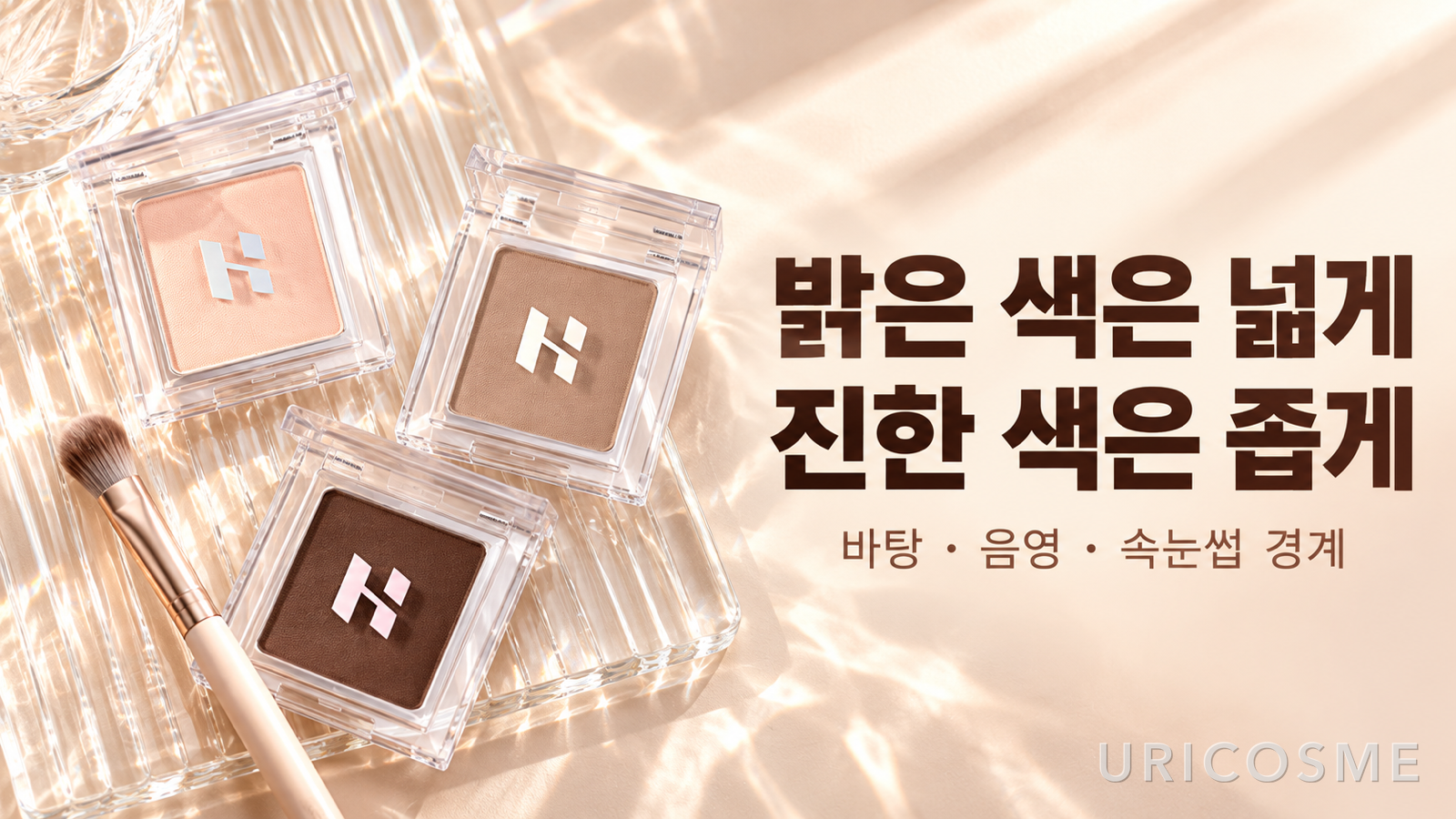
Think of Grilled Peach as the base color for the lid and Cinnamon Spice as the shade that adds depth at the inner and outer corners. The Korean official store describes Grilled Peach as a natural shading shade and Cinnamon Spice as a shading shade with fine pearl. A calm look does not have to be fully matte. A little shimmer kept to a small area adds texture without breaking the softness.
Work from light to dark. Sweep the peach on thinly, add the brown to a smaller area, and finish by defining the lash line with the deepest shade. Do not carry the dark color left on your brush across the whole lid. If blending the edge spreads the deep shade wider, the light base you saved at the start disappears.
A deep shade like Cocoa Brulee is an option for finishing the eye. You do not have to treat it as a replacement for eyeliner. Once the shadow is done, decide whether you still want a line, and add a little liner depending on your eye shape and how defined you want it. Soft color and a defined eye can go together. The real question is where you place that definition.
Nutty Beam and Lucky Nuts: judge the pairing, not the names
For cheeks and lips, the reference pairing is lilybyred Luv Beam Cheek Balm #15 Nutty Beam and BBIA Lucky Shine Tint 07. In Korea the tint shade is called Neoti-haeng, a play on "nutty," which is why the two sound like a matching pair; Olive Young Global lists it in English as 07 Lucky Nuts. They are separate products from different brands, so similar names are no guarantee of matching colors. A cheek balm and a lip tint differ in the skin underneath, the formula and the amount you apply, so you can only judge the combination side by side.
Nutty Beam is a candidate for tying the cheeks in calmly, and the tint for adding color and shine to the lips. What matters more than owning both is which one ends up more vivid on your face. If your cheeks look too pale once the lip color is on, add a little more blush. If your cheeks catch the eye first, soften the blush edges before building up the lips.
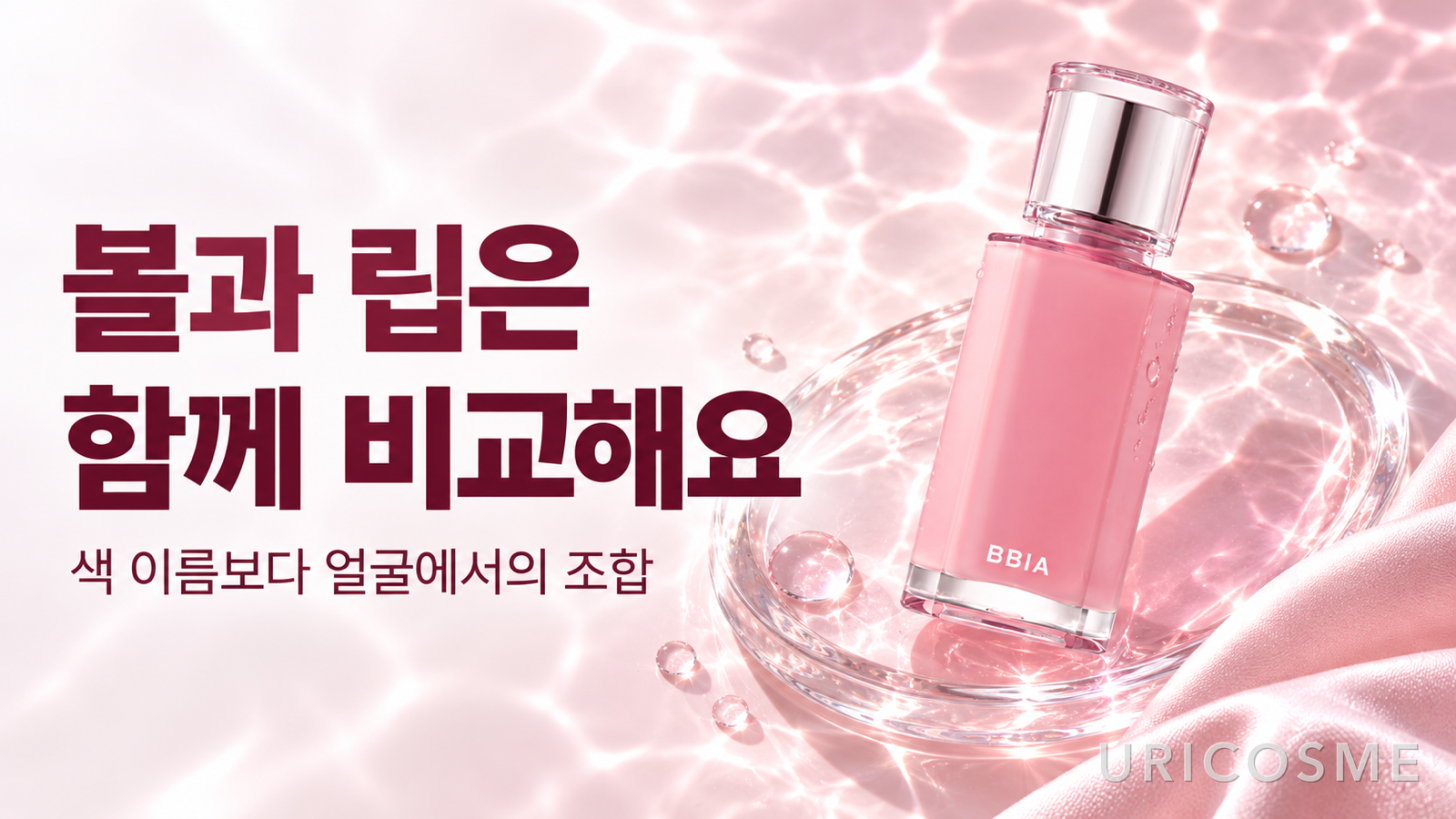
Instead of spreading cream blush wide in one go, place a small amount where you want the center of color, then blend what is left outward. The aim is to keep color at the center and let the edges fade into the skin. Filling a wide area at the same depth from the start means you may have to touch up the base to correct it. Even on days when the cheeks are the focus, the edges do not need to be strong.
Lips depend on your natural lip color. A tint that looks like a calm beige on the back of your hand can turn redder or deeper on your lips. Start with a little, see how the color and shine settle, and add only where it is lacking. Once the lips are vivid enough, there is no reason to push the cheeks to the same strength. The cheeks and lips do not have to look like the same color; they just should not look disconnected from each other.
Keep aegyo-sal and highlighter from standing out on their own
Aegyo-sal is the slight fullness just below the lower lash line that Korean makeup often brightens. If you keep the eyes and cheeks calm but the aegyo-sal turns stark white, the whole impression changes. When deciding how bright to make it, compare it with the shadow on your lids, not only with your skin. Soft peach on the upper lid and a strong bright band underneath pulls attention straight to that band.
Rather than filling it wide and bright, place a pale shade on a small area and then look at your whole face. If it looks dull, add a touch of light peach; if the bright part stands out first, reduce the amount or the area. The goal is not to erase the aegyo-sal but to connect it to the rest of the eye makeup. How sharp it looks in a close-up mirror and how balanced it looks across the whole face are two separate checks.
Highlighter follows the same rule. Adding light to the tip of the nose or the cheekbones can mean a broad flash of shine or a small touch of glow, and the two read very differently. If your cheeks and lips already have shine, a smaller highlight area may be all you need. Instead of choosing between matte and glow, decide where you want the light to stay, and the choice gets easier.
Finding these products outside Korea
All five products are listed on Olive Young Global. Regular prices there, before shipping and promotions, are $7.00 each for the My Fave Piece singles (Grilled Peach, Cinnamon Spice and the Cocoa Brulee Geltail), $13.99 for Luv Beam Cheek Balm #15 Nutty Beam, $19.00 for BBIA Lucky Shine Tint 07 Lucky Nuts, and $24.00 for the 15ml or $46.00 for the 45ml erborian CC Red Correct. Because the eyeshadows are sold as single pans, you can try one role, such as the peach base, before committing to the whole trio.
Olive Young Global does not ship to the 50 US states and D.C. Shoppers there are directed to the separate Olive Young US online store, where the lineup and prices can differ. erborian is also sold through US retailers; CC Red Correct SPF 25 in 45ml is $46.00 at Dermstore.
Before buying everything, sort the colors you already own
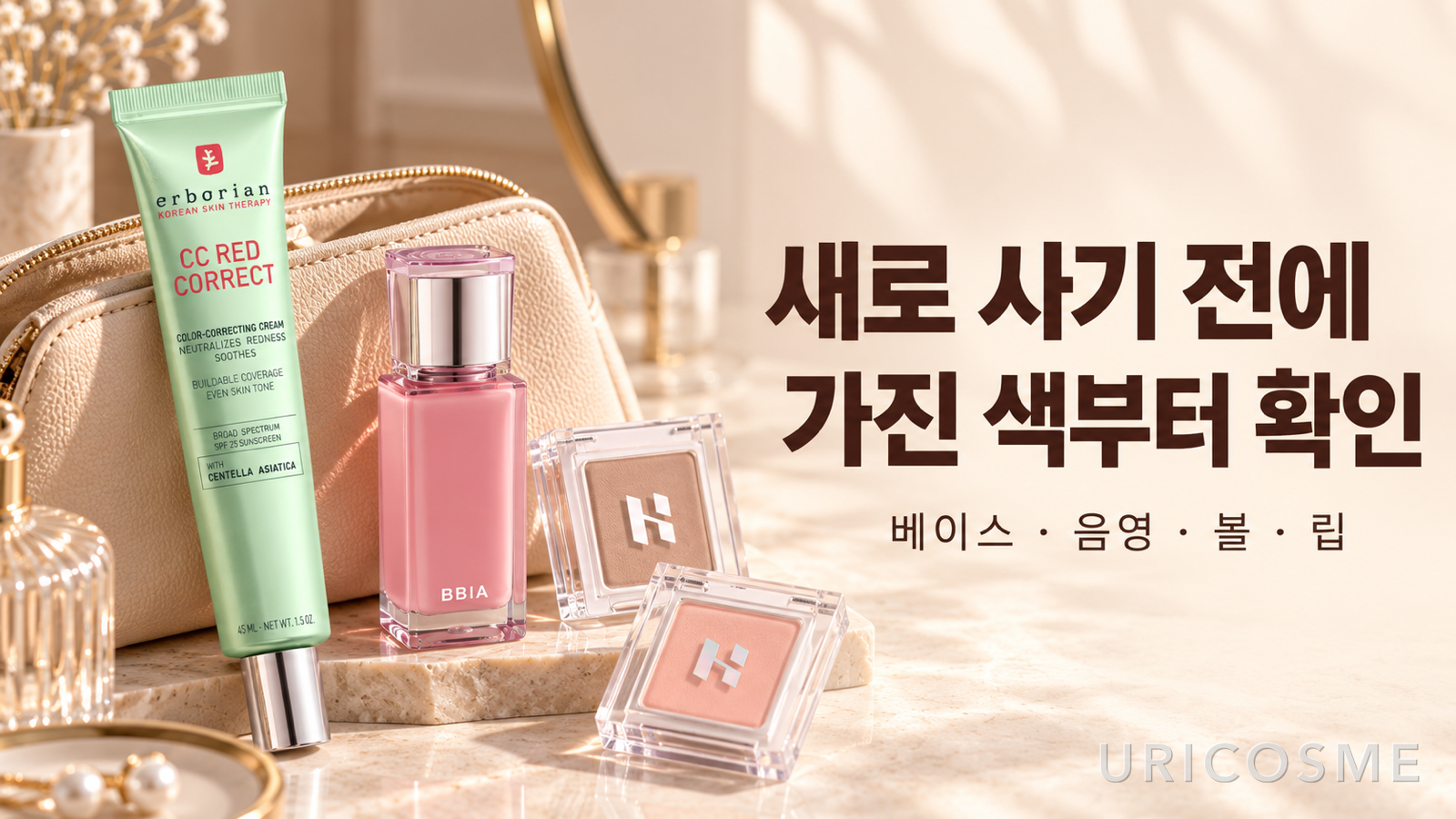
You do not need several palettes and blushes to try this look. Sort what you have into five roles: a light peach base, a mid brown shade, a deep definer, a calm cheek and a glossy lip. If one palette already covers the first three, start combining within it. Deciding which color fills each role is more flexible than owning the exact same products.
Start by finishing the lid base, a thin layer of shading, the cheeks and the lips, then stop and look. From there, add definition only close to the lashes and light only where you need it. If you are not happy with the colors, check whether any of them went on too wide before reaching for another product. Lowering the intensity or shrinking the area can change the whole combination.
The most important test for baked apricot makeup is not how much autumn color you used but whether the definition you need still shows among the soft colors. Keep the lids bright, place the deep shading only where it is needed, and adjust the cheeks and lips together. With that in mind, choosing your next color product becomes less about a pretty shade name and more about which role it will fill in your makeup.
Product names follow Olive Young Global's English listings, with the Korean official store's shade numbers noted where they differ. Prices and availability were checked on October 30, 2026, on Olive Young Global and Dermstore. Prices change with promotions, options and the country you ship to, so compare the same size and shade at checkout.