RF, LDM, EMS or LED? How to Choose the Right Beauty Device
By URITRIP

Shopping for a beauty device can be confusing when radiofrequency, LDM, EMS and LED are all promoted for firmer, more radiant skin. A useful starting point is to match the technology to your concern. For fine lines and firmness, look at the clinical evidence and usage requirements for the specific RF device. If you are interested in the ultrasound treatments often called “water-drop ultrasound” in Korea, check which equipment was used in the studies on hydration and redness. EMS uses electrical muscle stimulation, while LED uses light, so ranking them all as “lifting devices” is not especially helpful.
The most useful question is this: Is there evidence for the skin change you want, and can you realistically follow that device’s instructions? Maximum output and the number of features can come later. Even a device that suits your skin may be hard to use consistently if preparation and cleanup feel like a chore.
What makes RF, LDM, EMS and LED different?
Before getting caught up in the names, distinguish the energy each device delivers and its intended purpose. These four broad categories make product descriptions easier to interpret.
| Type | How it works | What to check before buying |
|---|---|---|
| Radiofrequency (RF) | Uses radiofrequency electrical current to heat tissue | Assessments of fine lines and firmness, temperature control, dedicated gel and treatment intervals |
| “Water-drop” ultrasound | Delivers ultrasound, using approaches such as alternating between multiple frequencies | Frequency configuration, units used to specify output, product-specific testing and instructions |
| EMS | Uses electrical stimulation to trigger muscle contractions | Intended treatment areas on the face, stimulation intensity, contraindications and consumables |
| LED | Exposes the skin to light at specific wavelengths | Target skin concern, wavelengths and exposure conditions, fit and eye protection |
“LDM” is not a generic term for every ultrasound device. It is associated with Wellcomet’s LDM® equipment and technology, although it is also widely used as a search term for water-drop ultrasound in Korea. A similar marketing name does not mean a home device performs like clinical equipment.
This distinction matters even more with multifunction devices. The official instructions for Medicube’s Booster Pro X2 list separate modes, including Booster, Microcurrent and Derma Shot. It may be worth considering if you want several types of care in one device. But a long feature list is not a reason to expect the same results as a dedicated RF or ultrasound device. Start by checking what the mode you intend to use actually does.
Heat alone does not tell you how well a home RF device works
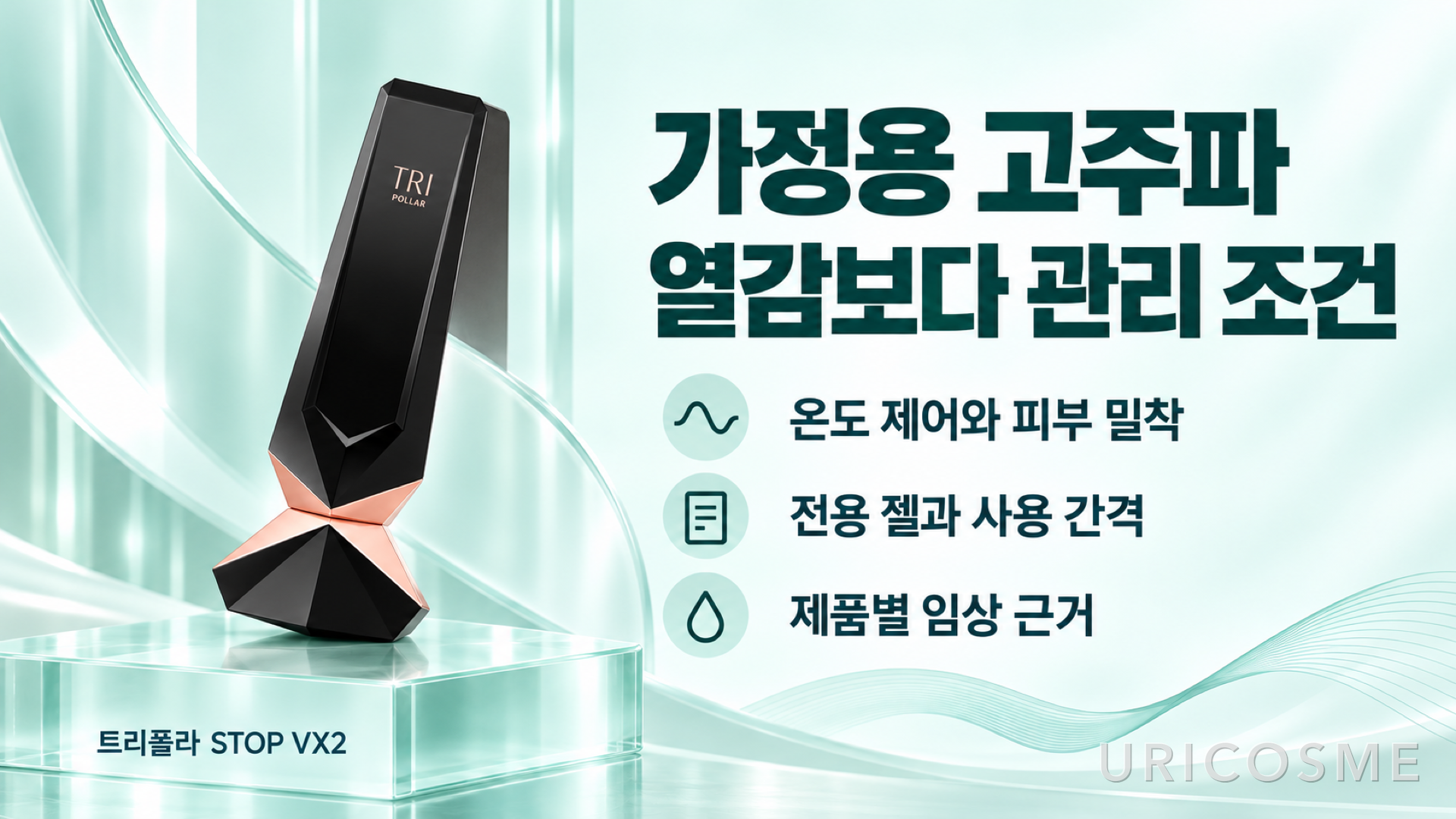
If your priorities are fine lines and firmness, and you can set aside time at the recommended intervals, RF is a category worth examining for product-specific evidence. Heat is central to how it works. That makes electrode contact, temperature sensing and control, and time spent on each area important alongside output.
Home devices have been studied. In one 12-week study, 33 women aged 35 to 60 enrolled and 32 completed the trial. They used the device on one side of the face and a comparison cosmetic product on the other. Some measures, including wrinkles, improved more on the device-treated side. However, the device combined RF with red LED, and different products were used on the two sides. The findings cannot isolate the effect of RF alone or be applied to every home device.
The more useful question in studies like this is what changes were measured after repeated use under defined conditions, rather than how different the skin looked immediately after a single session. Immediate before-and-after photos provide too little information to judge lasting changes in firmness.
For example, the official guidance for the TriPollar STOP VX2 specifies a corded power connection, use of its dedicated gel and a temperature indicator. The practical issue is whether you can follow that routine. Include the need to work through different areas near a power outlet, keep the device moving and wash off the gel afterward in your buying decision.
Avoid treating “hotter” as “better.” The warmth you feel at the surface does not reveal the temperature inside the skin, and stronger or longer use does not guarantee better results. Do not hold the device still in one spot or extend sessions on your own. Follow the instructions and temperature guidance for that exact model.
With ultrasound, look beyond the number of frequencies
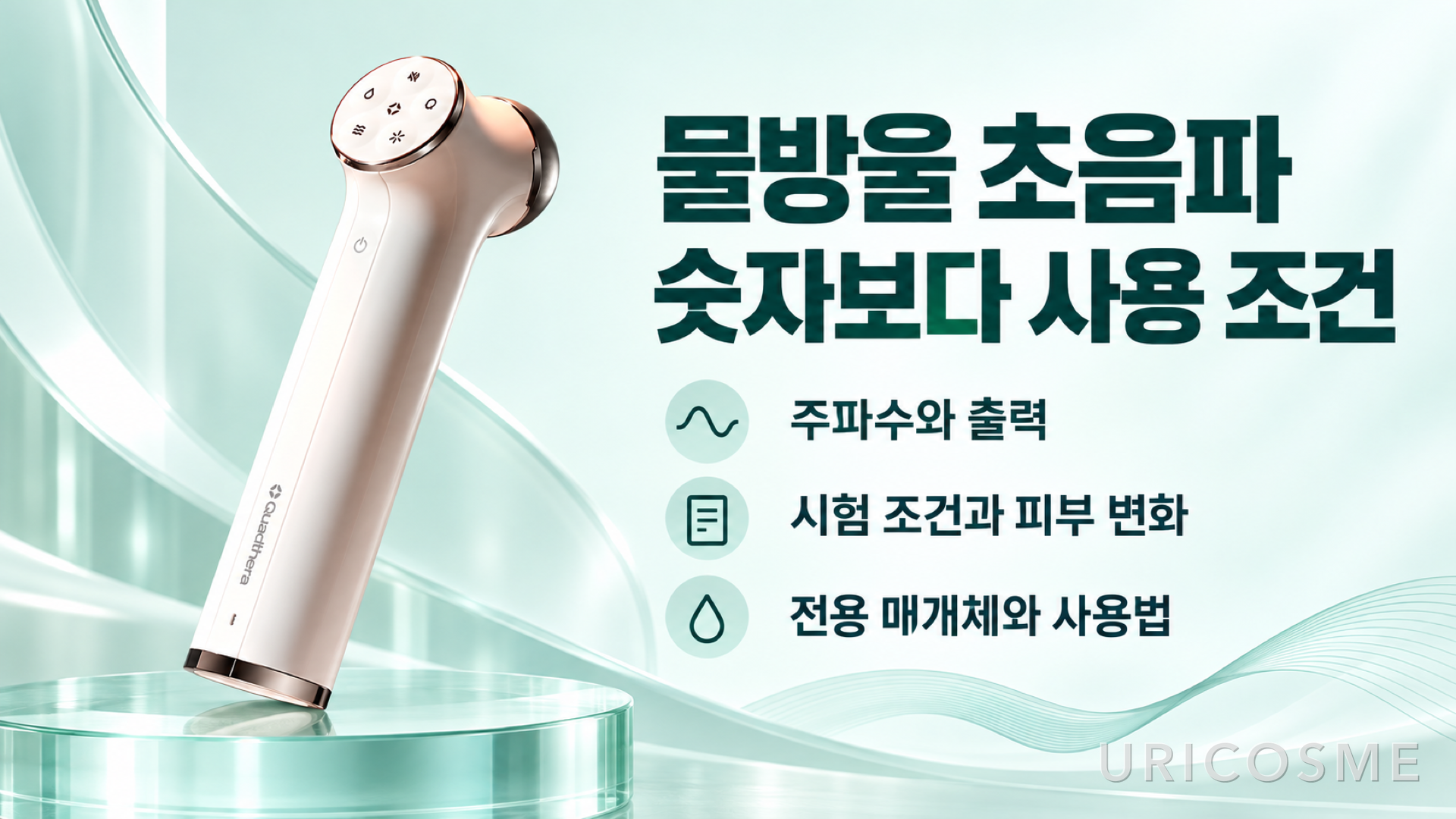
People interested in hydration or redness often come across water-drop ultrasound. In a study of 26 people with facial redness associated with rosacea or acne, researchers reported improvements in redness and transepidermal water loss after dual-frequency ultrasound was applied once a week for four weeks. However, this was a small study, not a comparison of all commercially available home devices. It does not mean that any ultrasound device will suit skin prone to redness.
The number of frequencies tends to stand out on a specification sheet. Medicube’s Booster Glow officially lists 1, 3 and 10 MHz, while the Quadthera Penta lists 1, 3, 10, 19 and 25 MHz. That establishes a difference in configuration: three frequencies versus five. It does not establish that five delivers greater skin benefits. That would require testing under comparable conditions.
Always read output figures together with their units. Total power in W cannot be ranked directly against intensity per unit area in W/cm². A switching count also means different things depending on whether it is measured per second, per minute or over an entire session. Before assuming a bigger number means better performance, check what it is measured against.
An output measurement report and a human-use study serve different purposes. The former describes the device’s physical output; the latter examines changes in people’s skin under specified conditions. Products that clearly distinguish these two types of evidence are easier to compare.
Before buying, also read the requirements for the coupling medium and application technique. Use gel or another ultrasound coupling medium as directed, and follow the model’s instructions for moving the treatment head. Rather than deciding that three frequencies are enough or five are essential, prioritize clear testing for your intended purpose and clearly stated conditions of use.
Feeling EMS contractions is different from seeing lasting contour changes
EMS uses electrical stimulation to make muscles contract. It sometimes appears alongside microcurrent in the same product, but the terms are not interchangeable. Check which mode delivers which type of stimulation on the device you are considering.
Immediate sensation can make this difficult to judge. A strong feeling of muscle movement can seem like evidence of a strong effect. But feeling a contraction does not, by itself, establish increased collagen, fat reduction or lasting changes to facial contours. If contour improvement is your goal, look at how that outcome was assessed for the specific facial device.
The FDA also distinguishes the action of electrical muscle stimulation from advertising claims such as weight loss or reduced body measurements. Its guidance mainly concerns body EMS, so it should not be used to dismiss or endorse the effectiveness of a particular facial device. The useful takeaway is to assess the presence of stimulation separately from evidence for the cosmetic result you want.
If you find electrical stimulation uncomfortable, the opportunity to try a device may be more useful than its specifications. For models that require electrode pads, cloths or gel, check replacement costs and cleaning requirements as well. If you have a pacemaker or another implanted electronic device, check the contraindications before considering use.
An LED mask also means paying for a more hands-free routine
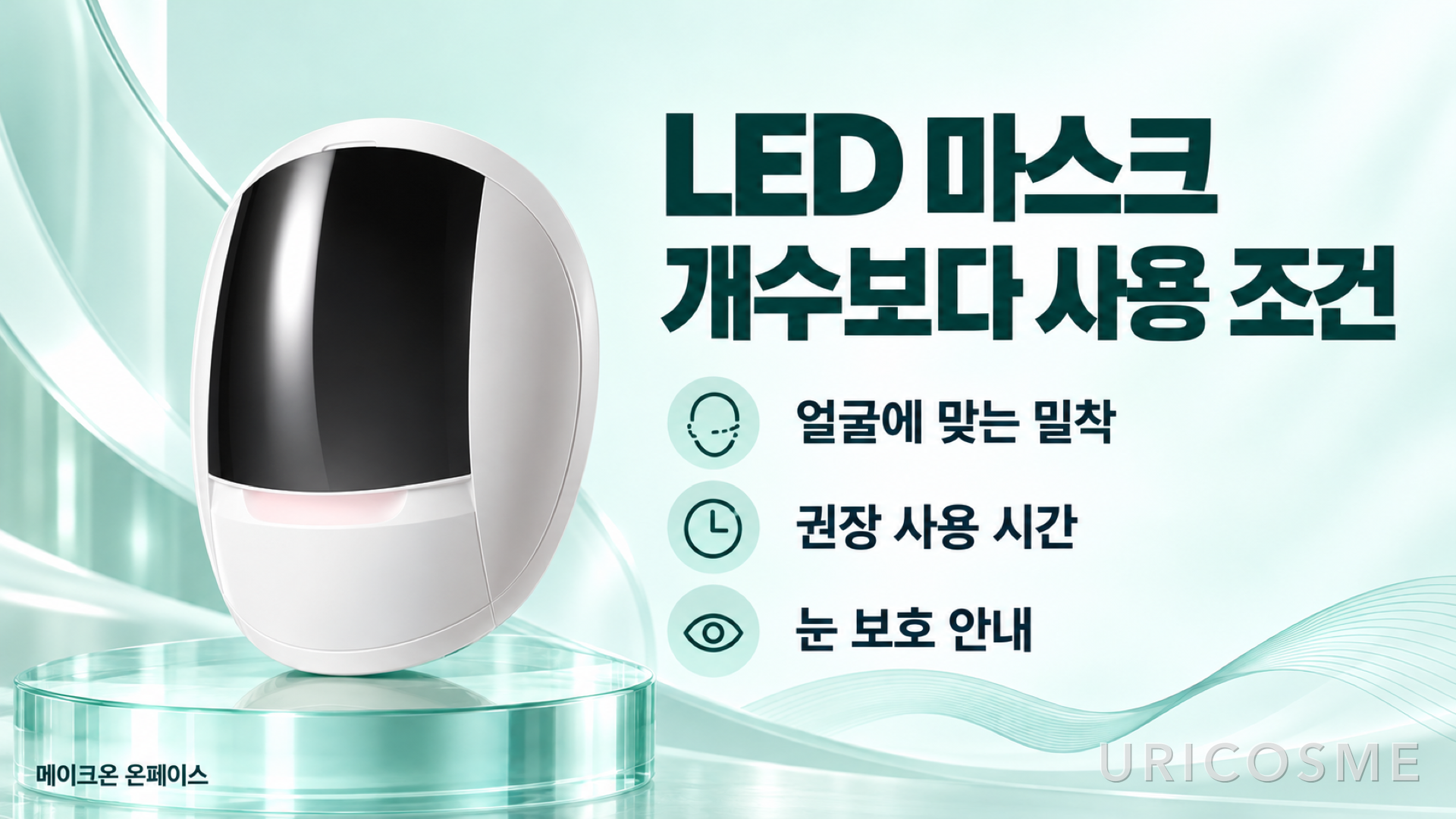
If continuously moving a handheld device feels cumbersome, the wearable format of an LED mask may appeal to you. It reduces the need to hold a device throughout the session. You still need to consider how well it fits, whether it feels comfortable, and whether you have space to clean and store it.
In its official announcement, Makeon describes the Onface LED Mask as having 3,770 micro red LEDs and a close-fitting design. These details help explain how the light is arranged and delivered. But the number of LEDs is not a direct measure of effectiveness. Wavelength, the amount of light reaching the skin, exposure time and distance also matter.
The American Academy of Dermatology explains that studies of red-light devices have observed potential improvements in signs of skin aging, including fine lines. It also notes that differences in devices and study conditions make it difficult to generalize about home-use results. This is not a one-session treatment: changes take time, and not everyone will see the same response.
Consider whether you can commit to repeated use rather than buying an LED mask with the expectation of fast, dramatic changes. If you have a condition or take medication that increases light sensitivity, consult a healthcare professional first, and follow the product’s eye-protection instructions. Those instructions take priority over marketing that suggests multitasking while wearing the mask.
Include gel and cleanup time in your cost comparison
Comparing purchase prices alone can hide the real commitment. Factor in dedicated gels, replacement pads and repair terms, as well as the time needed from setup to cleanup. An advertised 10-minute session does not necessarily include washing your face, applying gel and cleaning everything afterward.
For example, a device costing ₩600,000 works out to ₩5,000 per session if you use it 120 times, but ₩50,000 per session if you use it only 12 times. This is a simple illustration in Korean won, not an actual product price or a user review. It shows how strongly usage habits affect value. Consumables add to those amounts.
Instead of buying several devices at once, start with the single change you most want to see. Your priorities will differ depending on whether you want to address fine lines, complement your hydration routine or reduce the effort of handheld treatments. Buying devices with overlapping functions adds expense and makes it harder to decide how to schedule them.
Do not try to make up for disappointing results by combining several devices on the same day or increasing treatment frequency. Check each product’s instructions for combinations and intervals. If you have recently had a skin procedure, ask the clinician who treated you when you can resume device use. To assess results, take photos at regular intervals with similar lighting and angles so that temporary shine or differences in photography are less misleading.
Choose your first device around one clear priority
Before shortlisting a device, look for answers to three questions: Is there evidence relevant to your concern, are you free of the listed contraindications, and can you sustain the routine, including preparation and cleanup? If those answers are unclear, impressive specifications alone are not a strong reason to buy.
There should also be a clear reason to pay more. An identifiable difference in function or convenience may justify the extra cost if you will use it. If you do not plan to use that difference, start with products that explain their purpose clearly and fit a manageable routine. Before setting a maximum budget, decide what change you actually want and which usage requirements you can consistently follow.