Oily but Tight? A Guide to Cleansing, Moisturizing and Choosing Skincare
By URITRIP
This article contains affiliate links. URICOSME may earn a commission on qualifying purchases.
If your face looks shiny but your cheeks feel tight after washing, stronger oil removal is not necessarily the answer. Start by checking whether cleansing is leaving your skin uncomfortable, then see whether a lightweight moisturizer helps the tightness settle. A fresh finish and putting up with dryness are different things.
That distinction is useful when shopping, too. Rather than judging a product by how squeaky-clean or instantly dewy your skin feels, notice whether discomfort eases and stays away. Two people looking for skincare for “oily, dehydrated skin” may need very different things: one a gentler cleansing routine, the other more effective moisture.
Does oily skin that feels tight always mean the same thing?
“Oily but dehydrated” is a convenient everyday description for skin that looks oily yet feels dry or tight. It does not tell you what is causing that feeling. A shiny forehead and nose with dry cheeks may call for different adjustments than discomfort across your whole face immediately after washing.
Surface oil and the skin’s ability to retain moisture deserve separate attention. Visible oil does not prove your skin has enough moisture. Equally, a feeling of tightness cannot tell you how much water is present deep in the skin or diagnose the extent of barrier damage. It is more accurate to avoid explaining every case of shine as “dehydration making the skin produce more oil.”
Before looking for another product, note where you get shiny, when the tightness starts, and whether there is stinging or redness. Tightness straight after washing points you toward your cleanser and technique. Burning that happens only after a particular product suggests reviewing that product and how often you use it. Identifying when discomfort begins is more useful than trying to fit every decision to a skin-type label.
Judge your cleansing routine by how your skin feels afterward

Oily skin can make a stronger cleanser sound appealing, but cleansing is meant to remove dirt and excess oil. Skin does not have to feel stiff or tight to be clean. Treating that sensation as proof of a good wash can encourage stronger cleansers, more rubbing, and washing too often.
A general starting point is to wash no more than twice a day, and after heavy sweating. That does not mean reaching for cleanser every time you notice shine. Use lukewarm water and your fingertips, then pat dry with a towel instead of rubbing. Water temperature and friction are worth adjusting before buying something new: the way you use a cleanser changes the burden it places on your skin.
Whether to double-cleanse depends on what you need to remove, rather than skin type alone. Follow the removal instructions for waterproof sunscreen and makeup. Once those products have been adequately removed, repeating cleansing just to feel extra fresh may add little. “Cleansing oil” and “foam cleanser” are format names; neither tells you everything about makeup removal or irritation.
If tightness remains after washing, check whether one cleansing step is unnecessary or whether you are massaging for longer than needed. Simply cutting back while leaving hard-to-remove makeup behind is not the goal. Keep the removal you need and reconsider the repetition you do not.
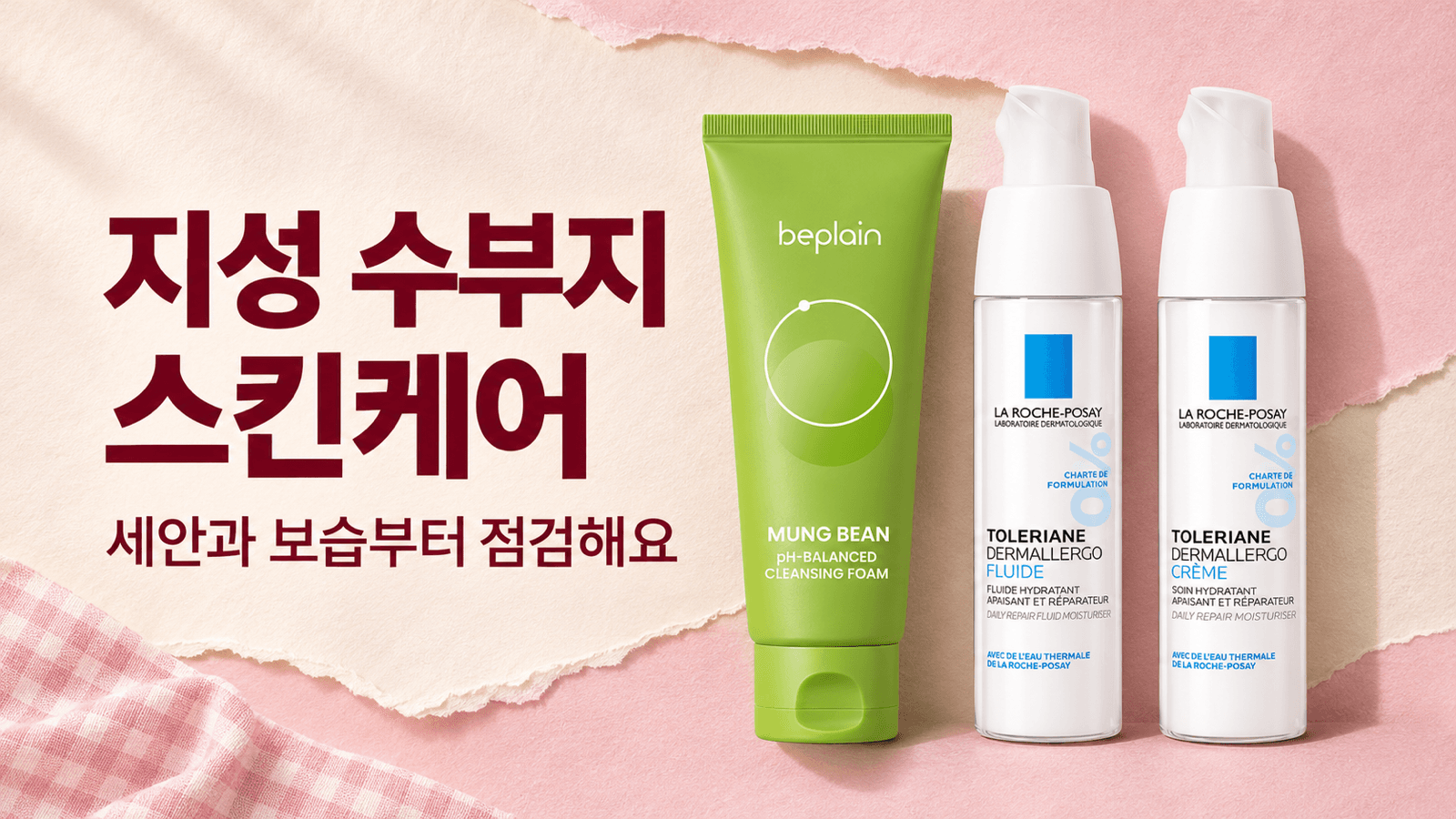
A basic foam cleanser to compare: beplain Mung Bean pH-Balanced Cleansing Foam
If you want a cleanser that lathers with water and rinses off, beplain Mung Bean pH-Balanced Cleansing Foam 80 mL is one option to consider. The reason to choose it should not be an expectation that mung bean will “solve” oily skin. The useful question is whether your skin feels comfortable after the cleansing you need.
A low-pH description can help narrow your search, but it does not guarantee a product will be irritation-free. Do not assume this cleanser alone will remove every kind of makeup; check the directions for your sunscreen and makeup as well. If your current cleanser removes them properly without tightness, appearing on a recommendation list is not a reason to switch.
If layers of toner do not help, reconsider your finishing moisturizer
If toner feels hydrating at first but tightness soon returns, consider what your moisturizer is doing before adding more layers of the same toner. Helping skin hold water and reducing the water it loses are both relevant to moisturizing.
Humectants such as glycerin help attract and retain water in the outer skin layer. Occlusive ingredients such as dimethicone and petrolatum help reduce moisture loss at the surface. A single formula can combine these functions. Thinking of lotion or cream only as “adding oil” can lead you to skip moisture your skin needs.
This does not mean oily skin needs a thick coat of heavy cream. If a shiny finish bothers you, a light gel or lotion may be a more comfortable starting point. Oil-free and non-comedogenic labels can be useful shopping clues, but they are not guarantees that everyone will avoid breakouts. The decision also depends on whether tightness and discomfort improve once you actually use the product.
Focus first on the texture and amount of your finishing moisturizer, rather than the number of steps in your routine. If your forehead feels comfortable but your cheeks remain tight, you can give the cheeks more moisture instead of layering the same amount everywhere. If one product is enough, you do not need to add both toner and serum. These adjustments make it easier to tell insufficient moisture apart from an uncomfortable buildup of products.
Toleriane Dermallergo Fluid or Cream: choose the texture for the job
Start by comparing the Fluid if you prefer a lighter finish
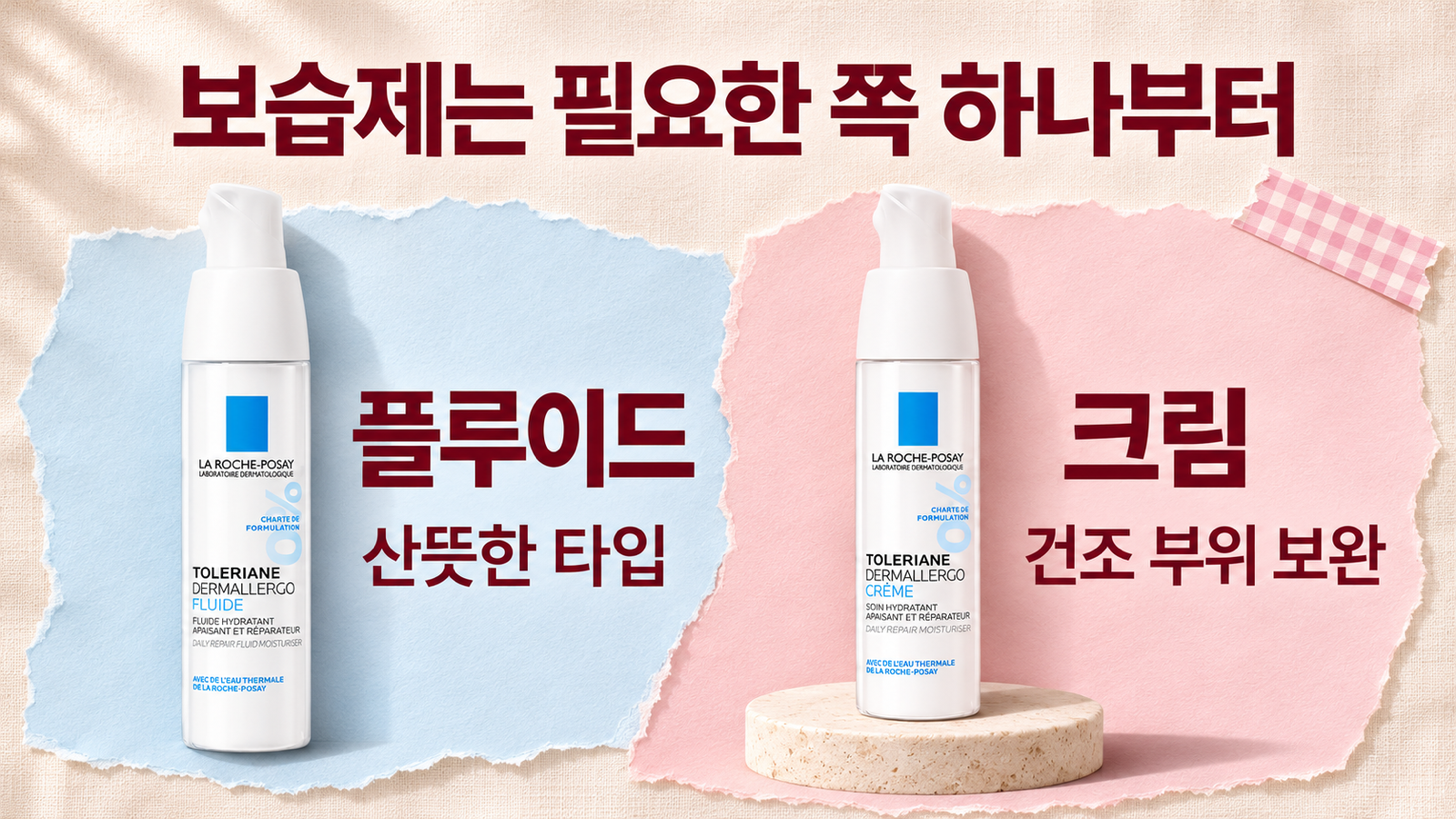
La Roche-Posay Toleriane Dermallergo Fluid 40 mL is an option if heavy finishes feel uncomfortable on oily skin. The brand’s Korean product information describes it as a light cream with a fresh texture. The Korean ingredient list includes glycerin and butylene glycol alongside shea butter and squalane.
“Lightweight” does not mean “contains no oily or emollient ingredients.” This is an option for someone who wants a lighter texture while still considering the moisturizing components. If it feels comfortable on its own, there is no automatic reason to add the Cream from the same range. This recommendation follows the brand’s texture description; it is not a hands-on review of absorption speed or stickiness.
Consider the Cream when dry areas need more support
If a lightweight moisturizer still leaves your cheeks or the area around your mouth feeling dry, compare Toleriane Dermallergo Cream 40 mL. The brand’s Korean information describes a more moisturizing texture, and lists ingredients including squalane, shea butter, dimethicone, and glycerin. Its role here is as a texture to consider for areas where moisture is falling short.
An ingredient list alone cannot tell you that the Cream will moisturize for a certain number of hours longer than the Fluid—or that it will cause more acne. The complete formulation, amount applied, and condition of your skin all affect the experience. These are two options for different preferences and needs, rather than products that need a winner.
| Your main concern | Option to compare first | What to notice in use |
|---|---|---|
| A heavy finish feels uncomfortable | Dermallergo Fluid | Whether the lighter texture also eases tightness |
| Cheeks still feel dry after light moisturizing | Dermallergo Cream | Whether adding it where needed feels comfortable |
You do not need to buy both and layer them in order. Start with the one that fills the clearer gap, then adjust the amount and where you apply it. More products do not automatically make this routine better. Product names, packaging, and formulations can differ by market, so check the information for the version you intend to buy rather than assuming a local listing matches the Korean one.
Check for overlapping exfoliation before adding another step
Wiping with toner pads, applying an oil-control serum, and finishing with an exfoliant can pile up irritation even when the products have different names. Friction from a pad and exfoliating ingredients such as AHAs or BHAs should be considered together, rather than as unrelated steps.
A suitable exfoliation schedule depends on concentration, formulation, instructions, and your skin’s response. Oily skin does not automatically require daily exfoliation, and “dehydrated” skin does not come with one fixed weekly schedule. If your skin stings or looks red, review what you already use before adding a new exfoliant.
Extra exfoliation can add dryness and irritation if you use treatments such as retinoids or benzoyl peroxide. Check your treatment instructions and discuss additions with your clinician. Cream pilling or sitting on the surface does not, by itself, mean you need to exfoliate. The amount you apply or the combination of products may be worth adjusting first, without adding more rubbing.
Keep the morning and evening steps that serve a purpose
In the morning, think in terms of cleansing as needed, moisturizing, and sunscreen. Choose broad-spectrum SPF 30 or higher, and follow advice to reapply about every two hours outdoors. Reapply after swimming or sweating according to the product’s directions. Even a light-feeling sunscreen may be a poor everyday fit if you struggle to apply enough of it.
In the evening, remove the products you wore that day appropriately, then moisturize. Add toner or serum when you can name the job you want it to do. If tightness is your main concern, review overlapping cleansing and exfoliation first, then adjust your finishing moisturizer before deciding what else to buy.
Change several things at once and it becomes difficult to tell which change mattered. Introduce new products one at a time. For ordinary cosmetics, one method is to try your usual amount on a small area, such as the inner arm, twice daily for seven to ten days. Rinse off wash-off products as directed. A clear small-area test cannot rule out future facial breakouts.
Stop using a suspected cosmetic product if swelling or severe itching develops, or if stinging and redness persist, and consider medical advice. Repeated painful acne or scarring also deserves care rather than an indefinite wait for a different moisturizer to fix it. Discuss changes to prescribed treatments with your clinician.
When shopping for oily skin that feels tight, replace “How much oil will this remove?” with “Which part of my routine feels uncomfortable, and how would this product help?” Notice whether tightness begins right after washing or remains in particular areas after moisturizing. When you can explain the reason for a change in one sentence, choosing the next product becomes much more specific.
Where to shop
The OLIVE YOUNG Global shopping link is for beplain Mung Bean pH-Balanced Cleansing Foam 80 mL and uses URICOSME’s referral code. We have not added Global shopping links for the two Dermallergo moisturizers because matching listings could not be verified. Check stock, shipping eligibility, and the product information for your destination before ordering.