Skincare Before Makeup: Order, Amounts and a Smoother Base
By URITRIP

When foundation keeps looking patchy, replacing it can feel like the obvious fix. But your skincare deserves a look too. A useful starting order is gentle cleansing, the moisture your skin needs, sunscreen, then base makeup. Having both a toner and a serum matters less than leaving your skin comfortable without the next product sliding around on top.
The useful test is not simply how dewy your skin looks, but whether makeup sits comfortably after moisturizing. Applying enough to leave your face shiny is not the same as meeting its moisture needs. Separating dry, flaky makeup from products rolling into little balls can help you avoid adding more of the wrong thing.
First, work out whether your base is flaking, pilling or breaking down
If your cheeks or the area around your mouth feel tight and foundation looks pale and cracked, dryness is worth checking first. If small, eraser-like rolls appear as your fingers or puff move across the skin, that may be pilling. Shine and a disrupted base around the nose later in the day are a different pattern again. They can all feel like makeup that will not sit right, but they call for different adjustments.
| What you notice | What to check first | Where to start adjusting |
|---|---|---|
| Tightness and more visible dry patches | Irritation from cleansing, dryness and moisturizing | Ease back on harsh cleansing and moisturize the dry areas |
| Products rolling up during application | How much you layer, the combination and how much you rub | Simplify optional steps and give products time to settle |
| Shine and makeup breaking down later | Oil, sweat and the amount of skincare and base | Adjust by area and gently blot excess oil |
This is a starting guide, not a way to diagnose the cause. Dryness and oiliness can happen together; mask friction and the foundation formula can also play a part. Still, noting when and where the problem appears makes it easier to choose your first change. Cheeks that pill during application and a nose that turns shiny in the afternoon do not necessarily need the same approach.
Build a simple order: cleanse, moisturize, sunscreen, makeup

The first step is not to scrub your skin clean. Use lukewarm water and a gentle cleanser, wash lightly with your fingertips, then pat dry with a soft towel. Repeatedly washing until skin feels squeaky clean, or rubbing with a towel, can irritate it. Stronger cleansing in pursuit of a smooth makeup surface may leave dryness feeling worse.
Apply moisturizer next. If you use toner or serum, you can fit it in before moisturizer according to the product directions, but every slot does not need filling. If you have a prescribed topical medicine, follow its instructions rather than a generic cosmetics routine. Starting with fewer steps also makes it easier to tell which products feel comfortable and which combinations cause trouble.
For daytime outings, applying sunscreen at the end of skincare and makeup over it is a practical starting order. Give the sunscreen time to settle before moving to foundation. Check the label too, since directions can differ between products.
Order is only the beginning. Three layers of moisturizer followed by generous sunscreen and primer will not necessarily finish like a routine using only what you need, even in the same sequence. Look at how much product remains on the surface, rather than stopping at memorizing the steps.
Will more toner and serum really make makeup sit better?
Toner is not essential for everyone. Cleansing, moisturizing and sun protection are the core steps; toner can be an addition based on your needs and how it feels. If moisturizer alone leaves your skin comfortable, you do not need to add toner just because someone says it is necessary to prevent “dehydration underneath.” Equally, there is no need to remove a toner that feels comfortable and helps with moisture.
Moisturizer is more than a lid that keeps water from escaping. A formula can combine ingredients that attract water, soften the skin’s surface and reduce moisture loss. It is therefore too simplistic to say cream cannot work without toner underneath. Pay attention to the actual formula and your skin’s response, rather than the product category alone.
Serum is not a compulsory middle step either. It can provide extra moisture or address a particular concern, but if skin already feels moisturized and makeup pills, an optional serum is one place to try simplifying. Adding several new products at once makes the cause of any discomfort harder to identify.
A watery texture does not mean you can apply unlimited layers. Even a thin formula leaves more material on the skin when layered repeatedly, and it may roll up depending on what goes on next. Apply once, check for tightness and residue, then add more only if needed. Wiping with a cotton pad is optional too; gentle application with your hands is another choice if friction bothers your skin.
Dry and oily areas do not need the same amount of moisturizer
If your skin is dry, avoid leaving it unmoisturized for a long time after cleansing. Cheeks or the area around your mouth may need a little more if they quickly feel tight. Rather than adding another heavy layer over the whole face, identify the uncomfortable areas and top up there. That also makes the amount easier to manage before makeup.
Oily skin needs moisture too. Instead of cleansing aggressively and skipping moisturizer because your skin looks shiny, look for a comfortable texture and amount. Oil-free and non-comedogenic labels can help guide a choice, but no label guarantees that a product will suit everyone without breakouts.
Do not assume that more oil always means too little water in the skin. Genetics and hormones also influence sebum production. Needing moisturizer is different from saying that more moisturizer alone will solve oiliness. Repeatedly adding toner and serum in response to shine may simply make your morning routine more complicated.
With combination skin, the nose, forehead and cheeks do not have to get equal amounts. First try adjusting how much of your existing moisturizer you use in each area. If the difference is still substantial, consider different textures. Judging comfort and residue after application is more useful than assuming a clear product supplies water and an opaque one supplies oil.
Check how the layers work together, rather than chasing a tacky finish

A slightly sticky finish is sometimes described as a sign of a rich, grippy skincare layer. But more tack does not universally mean better foundation adhesion. Some bases can bunch up over sticky skincare, while a lighter-feeling combination may be more comfortable. What matters is how your actual sunscreen and makeup behave together on your face, rather than a sticky sound when you tap the back of your hand.
If products pill, review the layers before adding more skincare. Too much product, moving straight to the next layer, or an incompatible combination can contribute. Finding one ingredient on a label is rarely enough to identify the culprit: you need to see how the complete formulas behave together.
Change one thing at a time. Keep your sunscreen and foundation the same and try leaving out only your morning serum, for example, so you have something meaningful to compare. You can then adjust the moisturizer amount or how much you rub. Do not start by cutting back on the amount of sunscreen you need.
No single waiting time fits every product. After moisturizer, check whether excess wetness is still sitting on the surface. Follow the sunscreen directions and give it time to settle. Guidance about applying sunscreen before going outdoors is different from a fixed waiting period between every skincare step.
Exfoliation and sheet masks are optional, not compulsory makeup prep
Visible flakes can make you want to scrub them away immediately, but scrubbing skin that is flaking from dryness or irritation can make matters worse. Exfoliation is not necessary for everyone, and its intensity and frequency should fit your skin and the products you already use. Combining it with retinol or some acne treatments can increase dryness and irritation.
The morning of an important event is not a good time to test an unfamiliar peel. If an attempt to smooth your skin leaves it red or stinging, makeup may not solve the problem. Stick with familiar care that has felt comfortable on your skin.
A sheet mask is not an essential pre-makeup step either. If you use one, follow the recommended time and consider whether you really need to layer several more products over the remaining essence. Feeling heat in the skin is not, by itself, a reason to treat a mask as the answer: consider the cause and skin condition first. After a procedure, follow your treating clinician’s aftercare instructions.
Do not reduce sunscreen to improve your foundation finish
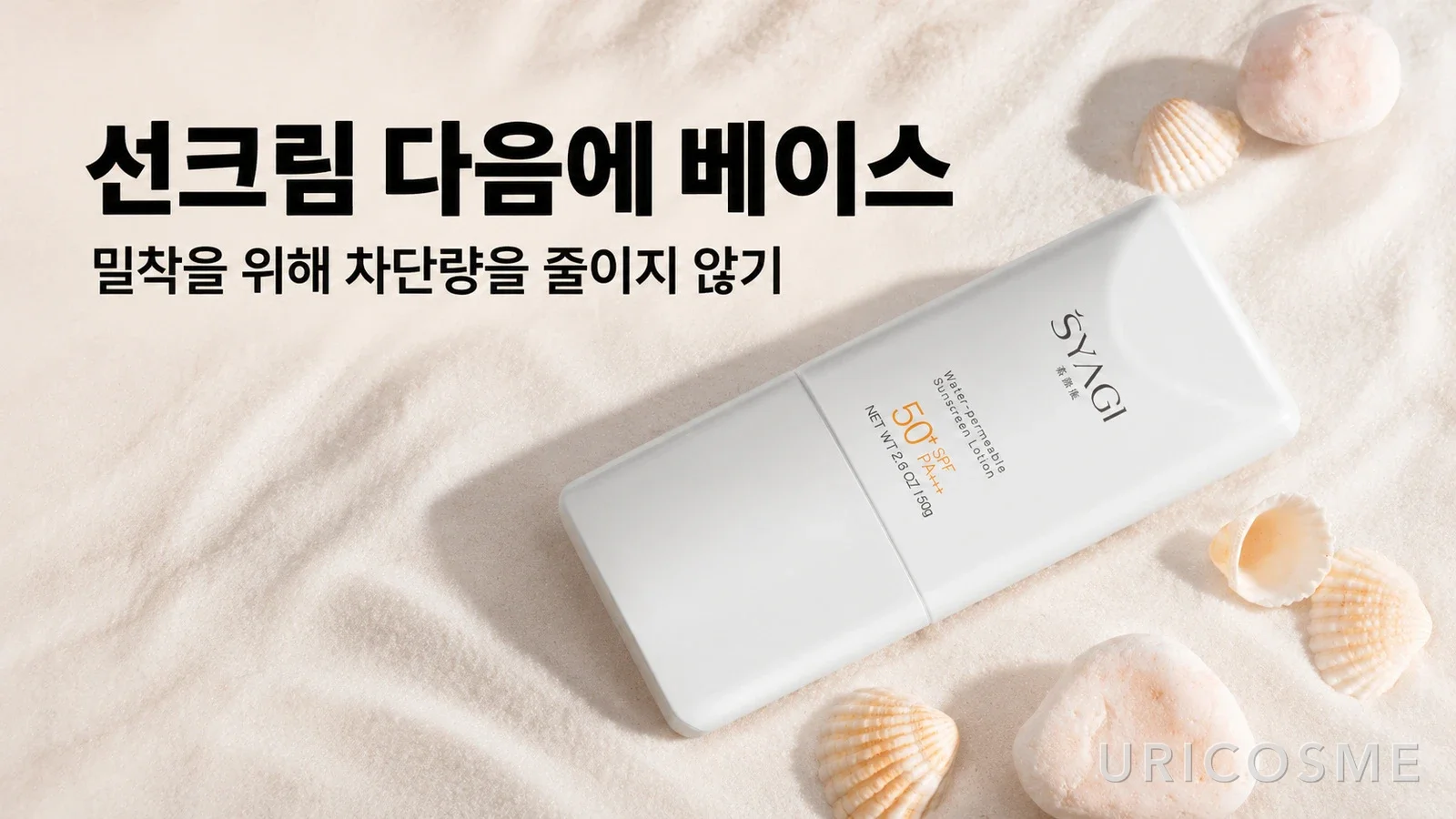
A thin, comfortable base and adequate sun protection are separate goals. The amount of SPF cushion foundation or regular foundation used for makeup may not provide the protection stated on its label. Rather than applying only a tiny amount of sunscreen to avoid a heavy finish, find a formula you can wear comfortably in the amount directed.
The American Academy of Dermatology recommends SPF 30 or higher, broad-spectrum, water-resistant sunscreen for outdoor use. When comparing Korean sunscreens, check SPF, the PA rating for UVA protection and the directions together. Reapply as needed outdoors and use shade and a hat as well.
Judge your pre-makeup routine by whether your skin feels comfortable, you maintain the sun protection you need, and your familiar base goes on without difficulty. Before adding something new, identify the area that feels uncomfortable and the step when trouble starts. That gives you a better basis for deciding what to add and what to reduce for your own skin.
Where to find the related products
These are optional examples from our product database, not products you need to buy together. Choose according to your skin and the products you already use.
- COSRX Low pH Good Morning Gel Cleanser 150ml — COSRX cleanser · Olive Young Global
- AESTURA Atobarrier365 Cream 80ml — AESTURA cream · Olive Young Global
- ROUND LAB 1025 Dokdo Sun Cream 50ml — ROUND LAB sunscreen · Olive Young Global
Affiliate disclosure: we may receive a commission from purchases through these links. Olive Young Global links include our reward code URICOSME1. Check the size, ingredients, availability and delivery region before ordering.


