Woodbury Brow Pencils: Hard Texture vs. Pro Auto and How to Choose a Shade
By URITRIP

Thinking of switching brow pencils, but worried that a more affordable option might look too dark or be difficult to use? If you are considering Woodbury, start by deciding whether you prefer the sharpenable Hard Texture or the twist-up Pro Auto. Hard Texture is worth a look if you like shaping the tip yourself. Pro Auto is the more convenient starting point if you would rather skip sharpening and have a spoolie built into the same pencil.
Looking for an affordable alternative to Shu Uemura Hard Formula is often less about the name on the pencil and more about getting natural-looking brows at a reasonable price. That means the price tag is only part of the decision. Consider whether a pencil gives you the shade and strokes your brows need, and how easy it is to keep it ready for everyday use.
What to compare when looking for a Hard Formula alternative
When comparing Woodbury Hard Texture with Shu Uemura Hard Formula, the useful point of comparison is how a firm pencil lets you fill sparse areas gradually. Woodbury describes Hard Texture in terms of controlled color payoff and pressure control, while Shu Uemura explains how its hard lead and fine edge can create individual hair-like strokes. That comparison matters if you prefer building up color in light layers rather than drawing a dark outline in one go.
However, “made in the same factory” and “the same finished product” are different claims. A manufacturing location alone cannot establish that pigment blends, lead hardness, color on the skin, or resistance to rubbing are identical. A claim such as “99% identical” is also difficult to treat as an objective performance figure without a test method and a clear explanation of what was compared.
If you already love a particular Hard Formula shade, think about what you want to keep before ordering another pencil with a similar shade name. Is it the gray undertone in the brown, the light color payoff that stays manageable after several passes, or the fine strokes made by a carefully shaped tip? Each answer points to a different feature to check. Narrowing down your priorities is more useful than simply hearing that a pencil resembles a well-known product.
Hard Texture vs. Pro Auto: start with the format, then the amount
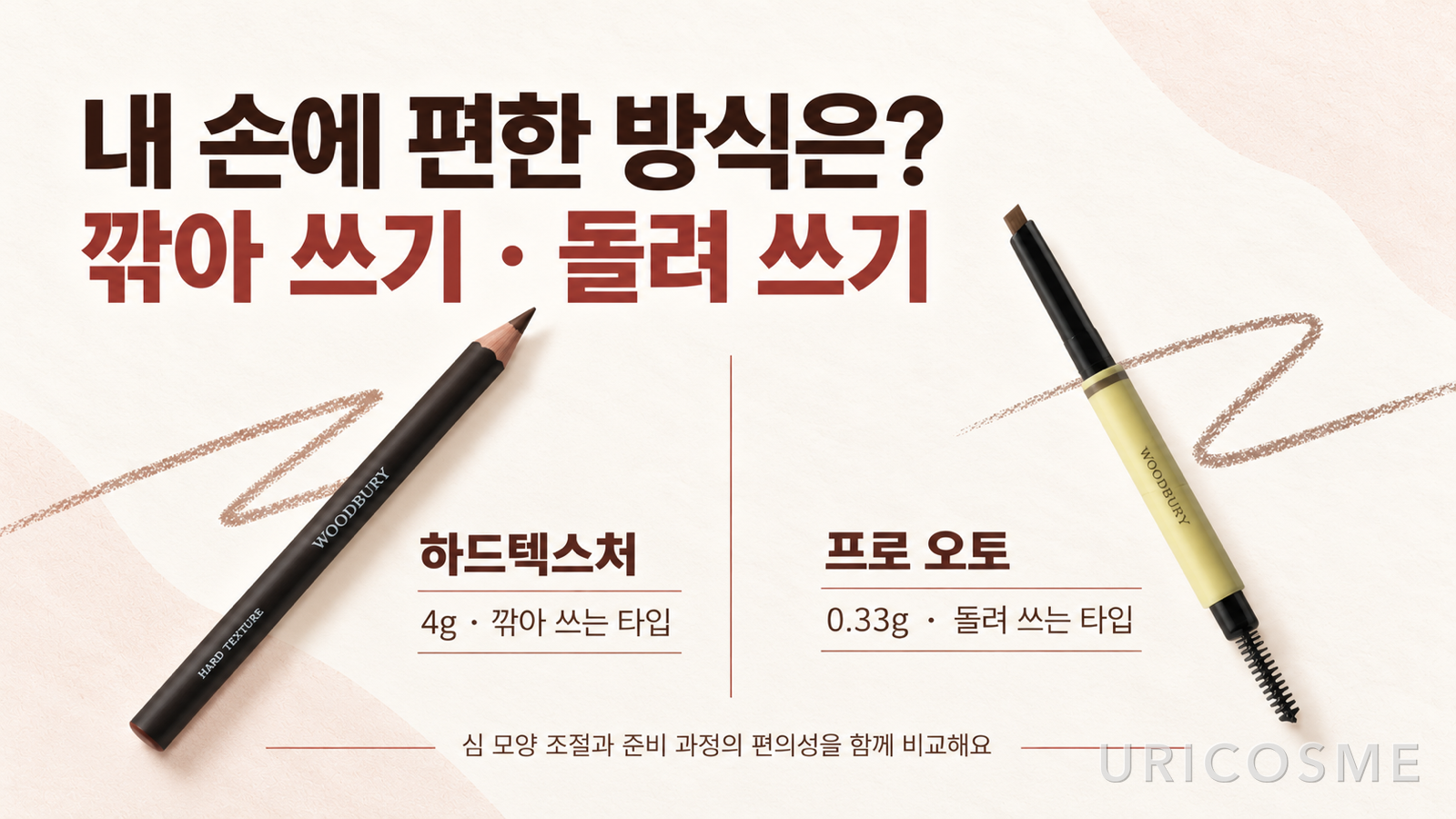
Here are the basic differences. Prices below are the listed prices before discounts on the brand’s Korean online store, in Korean won. What you actually pay will depend on the retailer, promotions, and shipping terms.
| Feature | Hard Texture Eyebrow | Pro Auto Brow Pencil |
|---|---|---|
| Format | Wooden pencil that requires sharpening | Twist-up pencil |
| Stated net weight | 4 g | 0.33 g |
| Listed price before discounts | KRW 14,000 | KRW 19,000 |
| Main feature to consider | A tip you can sharpen to your preferred shape | Angled tip and built-in spoolie |
| Practical consideration | Requires a sharpening tool and tip maintenance | Contains less product by weight than the sharpenable version |
The difference between 4 g and 0.33 g is substantial, but dividing those numbers will not tell you how much longer one pencil lasts. Sharpening uses up some product, and the area you fill and the pressure you apply will vary. Net weight is one factor in judging value; how many months you get out of a pencil is a separate question.
Hard Texture may appeal if you are comfortable sharpening a pencil and adjusting its tip. If you want a quicker morning routine or fewer tools in your makeup bag, paying more for Pro Auto’s convenience can also make sense. Judging the comparison solely by how much product you get overlooks those everyday differences.
For fine, hair-like strokes, factor in tip maintenance
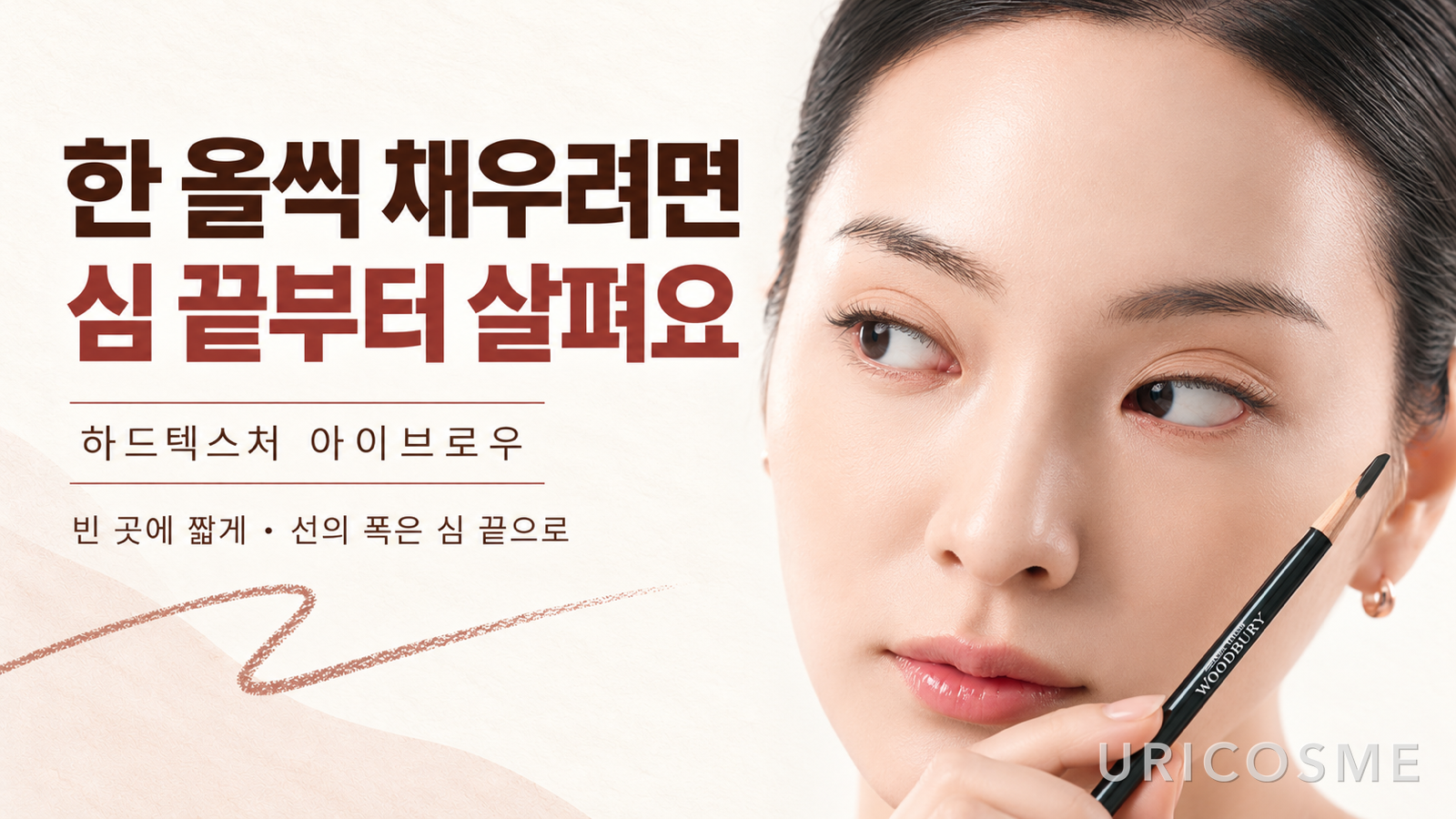
If your brows are already fairly full and you only want to fill small gaps, the key question is whether you can add a fine stroke exactly where you need it, rather than how dark the pencil can go. A wooden pencil lets you adjust the width of your strokes by shaping the tip, making it worth considering for this approach. Choosing that format also means taking on the upkeep of the tip.
The same pencil behaves differently with a rounded, worn tip than with a fine edge. If you repeatedly rub a broad surface over a small gap, you may end up adding color around it as well. Before pressing harder to get a precise result, check whether the tip is actually shaped to make the stroke you want.
A faint swatch on the back of your hand does not necessarily mean a pencil has poor color payoff. Shu Uemura describes Hard Formula as developing color on contact with the natural oils in brow hairs. That explanation should not be assumed to describe how Woodbury works, but it does illustrate why comparing darkness on a bare hand has limitations. If possible, try light strokes around your brows over your usual base makeup and see how the color applies.
If you need to fill a larger area with very little brow hair, there is another point to check. Adding strokes between existing hairs and creating a new shape on bare skin call for different results. Even if you like the fine lines, filling a wider area may take more effort, so see how easily the color builds where you actually need it.
Choose Pro Auto when you want to skip sharpening
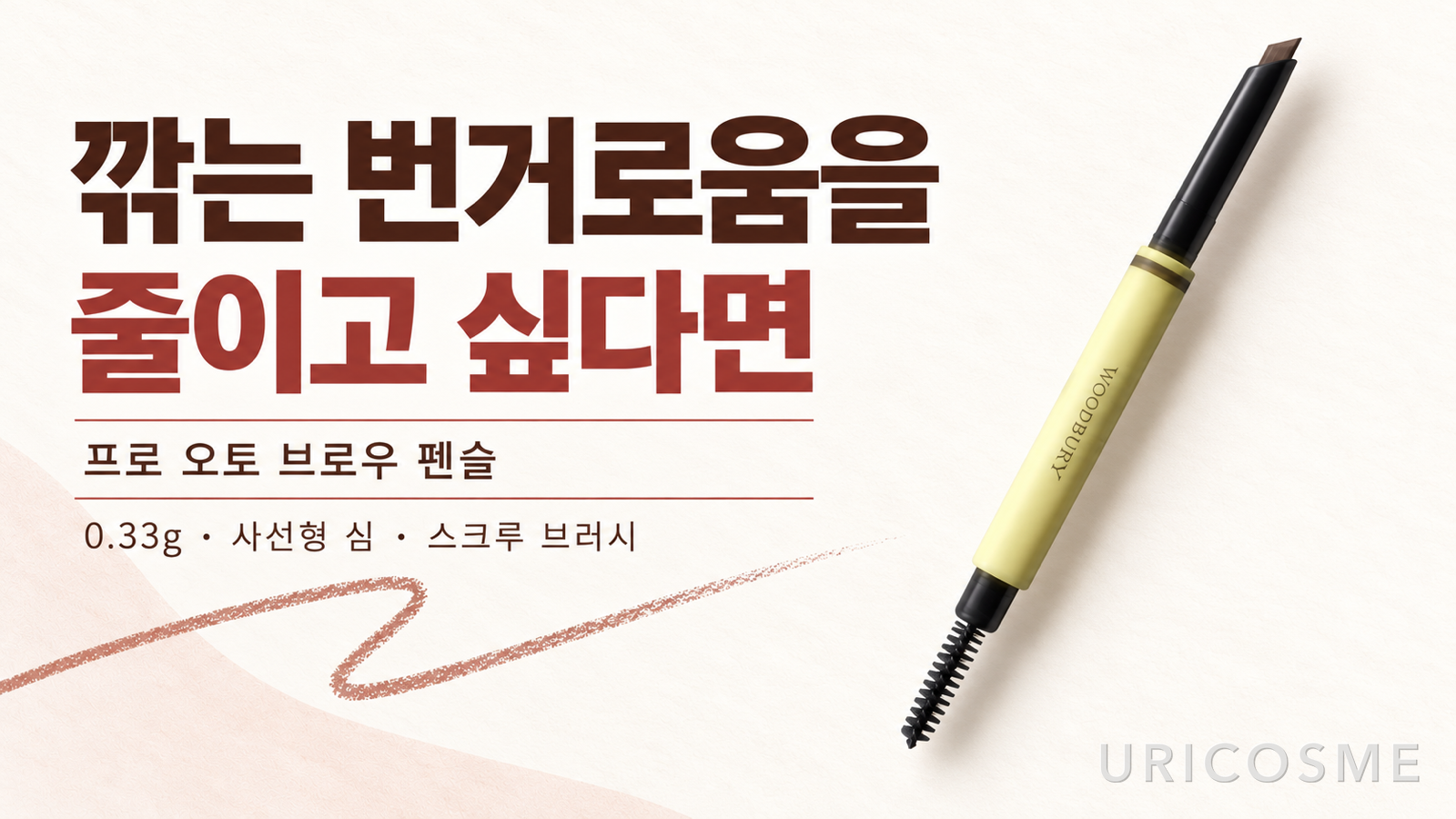
Pro Auto has an angled tip at one end and a spoolie at the other. Its clearest advantage is that you can twist up the pencil and brush your brows into place without sharpening or reaching for another tool. That is a practical difference if preparing the tip before makeup and tidying away tools afterward feels like a chore.
You can use different parts of the angled tip for different tasks. Try the narrow edge where you need a defined line, such as the tail, and adjust your pressure when using the broader surface so that the color does not spread farther than intended. Filling gaps with short strokes first, rather than outlining the whole brow heavily, leaves more room for adjustments.
“Auto” describes the twist-up mechanism. It does not mean the pencil is necessarily softer or longer-lasting than Hard Texture. If you are deciding between them, separate ease of getting the tip ready from ease of controlling the depth of color. That will also help you judge how much a shorter prep routine matters to you.
Choose a shade for both your hair color and brow density
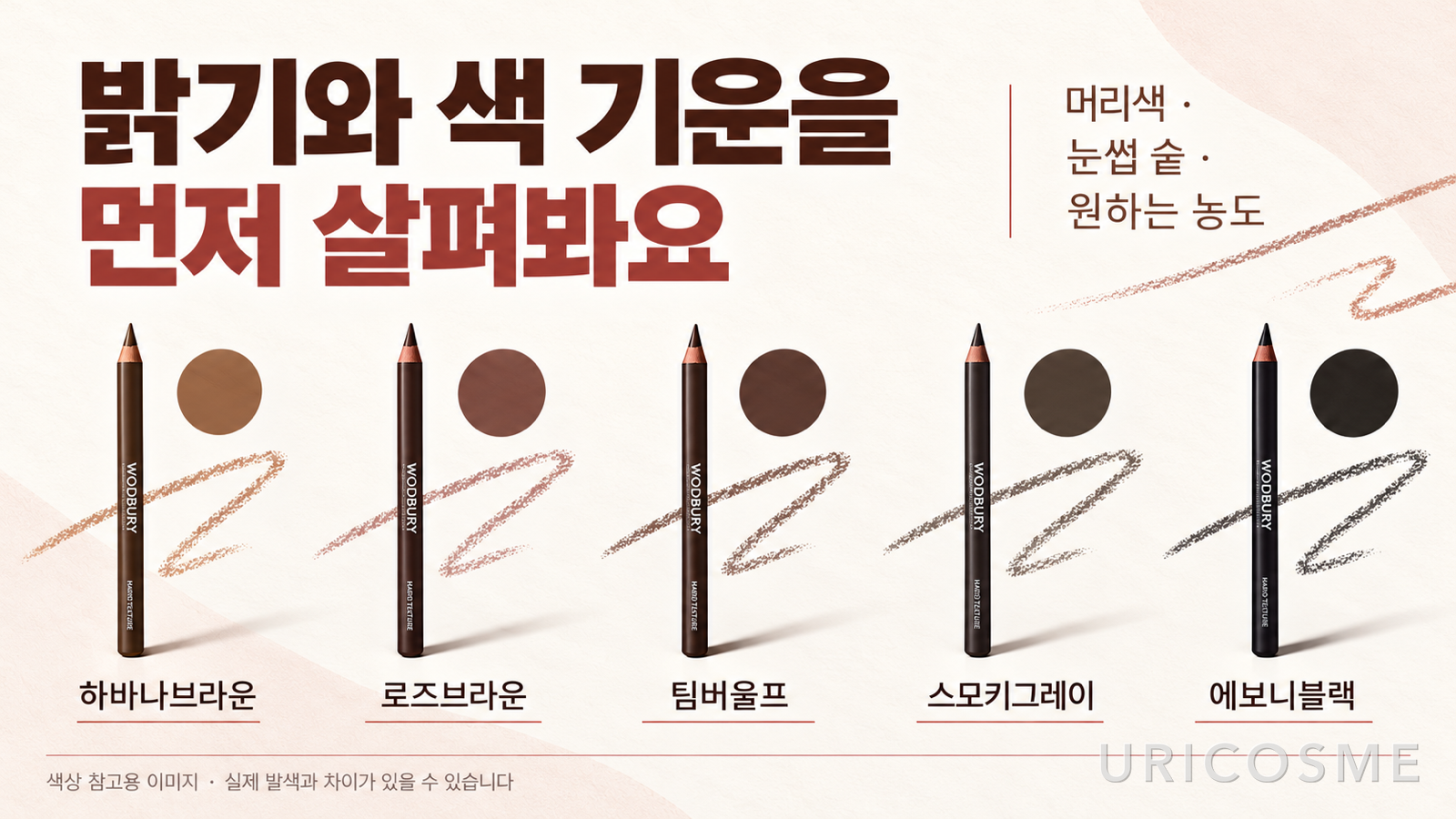
Hard Texture is offered in five shades: Havana Brown, Rose Brown, Timber Wolf, Smoky Gray, and Ebony Black. The brand describes Havana Brown as a yellow-toned brown, Rose Brown as a reddish chocolate brown, and Timber Wolf as a dark brown. Smoky Gray is a gray-brown, while Ebony Black is suggested for filling gaps in naturally dark brows.
If your hair is dyed a lighter color and you want to soften the contrast with your brows, Havana Brown is a starting point. Rose Brown is worth comparing for a warmer brown look, while Timber Wolf is an option if you want a dark brown to complement naturally brown hair. For a look with less redness, start by checking the description of Smoky Gray. Narrow down the options this way, then look at how the color actually applies and works with your face.
Black hair does not automatically mean you should choose Ebony Black. Connecting a few small gaps in already dark, dense brows is a different goal from giving the whole brow a softer appearance. In the first case, the added strokes need to blend with existing hairs; in the second, the overall prominence of your brows matters more. Even with the same hair color, the amount and depth of color you need can differ.
Pro Auto comes in Corgi Brown, Birman Brown, and Rabbit Smoky. On the official shade chart, Corgi Brown sits toward the lighter end, and Birman Brown is positioned as warmer than Rabbit Smoky. Start with Corgi Brown if shade depth is your main consideration; compare the other two if you want a more subdued tone. It is more accurate to read each range’s shade chart separately than to assume that browns from the two ranges are exact matches.
Warm and cool labels on a shade chart are clues to undertone, not a guarantee that a shade will suit a particular skin tone. Screen brightness and lighting also affect how colors appear. Alongside a dense swatch on your hand, check how a thin stroke blends into your existing brows. A few small strokes may be all your face needs.
Compare the total cost of the pencil you need, not just the discount
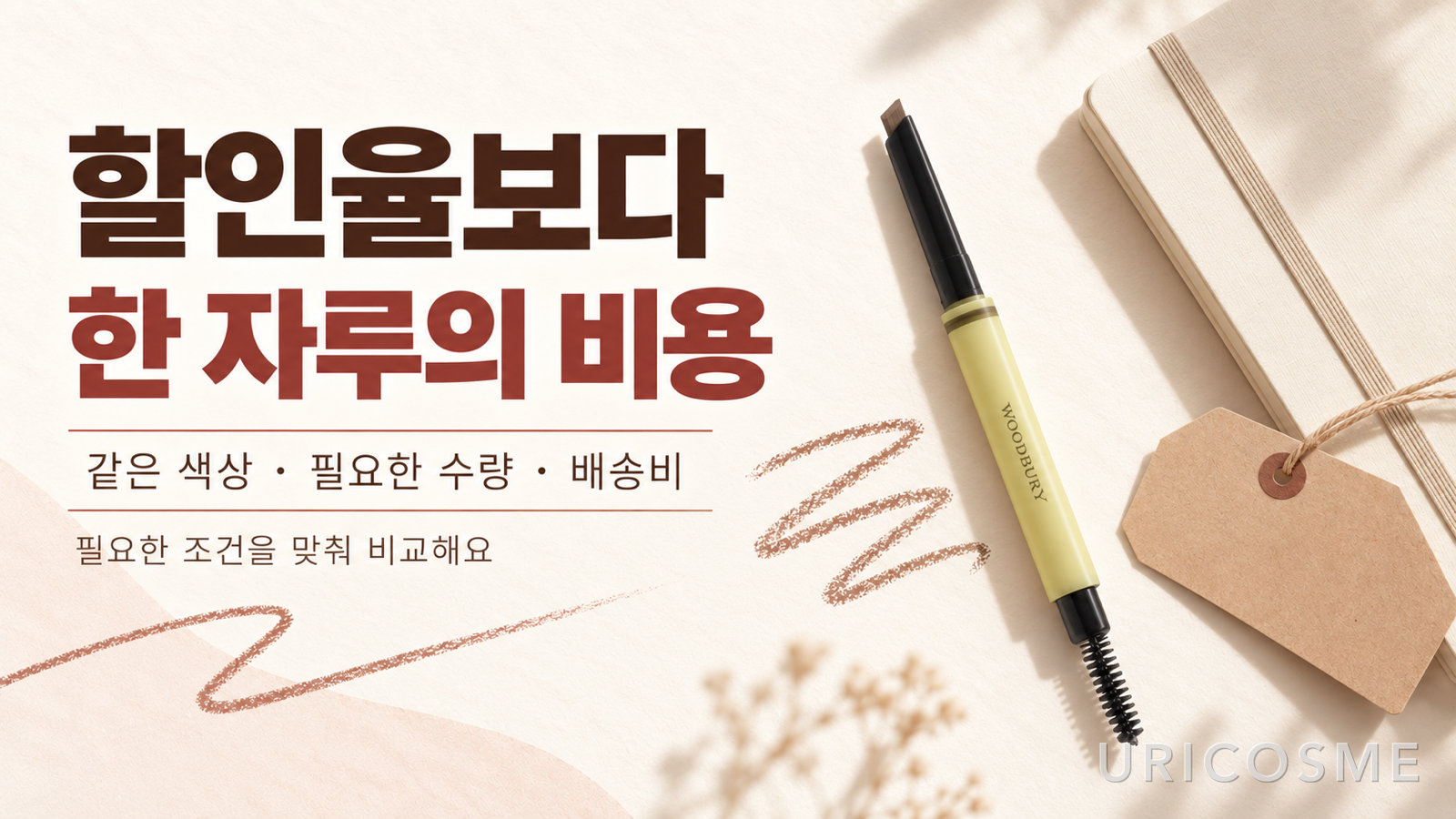
In Korea, prices and purchase terms for the same Woodbury product can differ between the official store, Olive Young, and promotional listings. Rather than treating “cheaper than Olive Young” as a claim that holds at all times, compare the total including shipping for the same shade and quantity. A large discount may be less useful when you only need one pencil if it requires buying several or bundling shades you do not want.
If you are still choosing your first shade, it makes sense to settle on one format and one color before stocking up. That better serves the aim of finding a tool you can use comfortably every day. The brand also lists a 12-month period after opening for both products, so a generous amount of product is not a reason to assume it can be used indefinitely.
Let the most frustrating part of your brow routine guide you
Hard Texture’s appeal lies in shaping and maintaining the tip to create the strokes you want. Pro Auto’s appeal lies in reducing that preparation. If you are unsure which is better for you, think of the step that most often slows you down: sharpening, adding fine strokes only in the gaps, or finding a shade that works with your hair.
Choose the format that addresses that frustration, find a shade that blends naturally with your brows, and then compare prices. How easily a Woodbury pencil helps you create your everyday look is a more lasting reason to choose it than how closely it resembles a famous alternative.